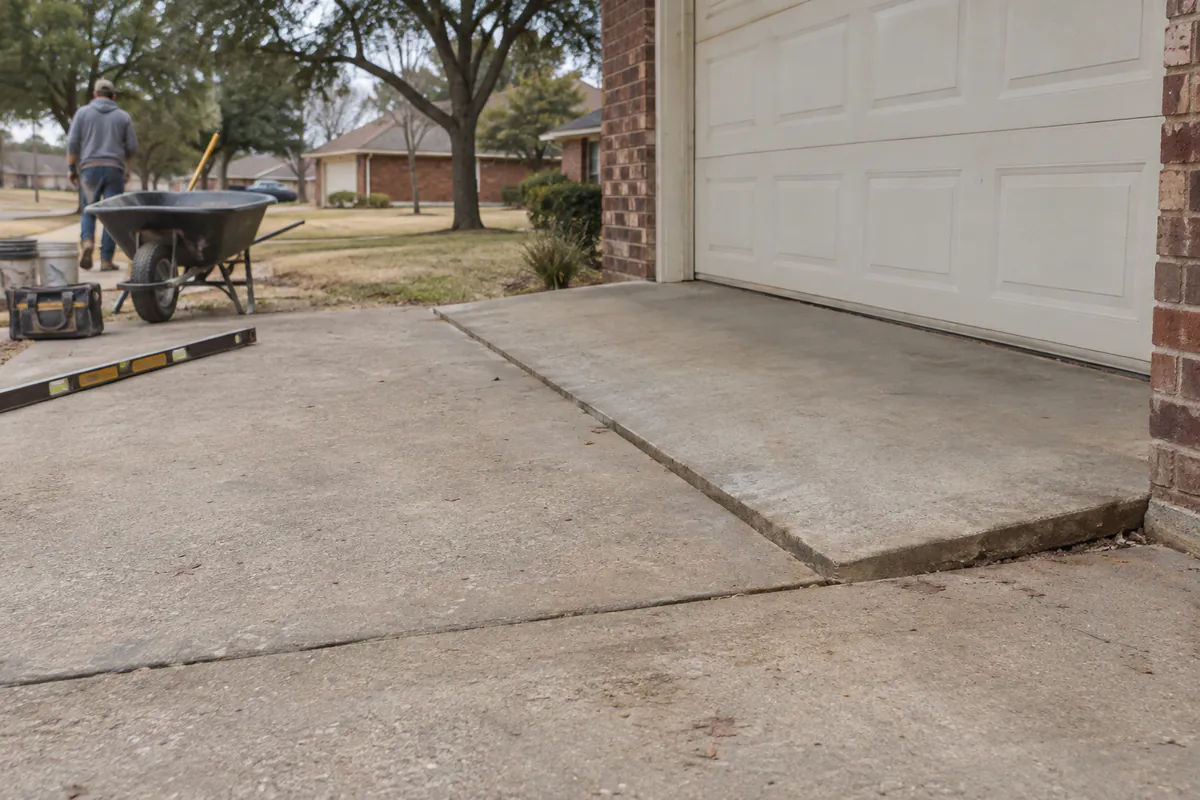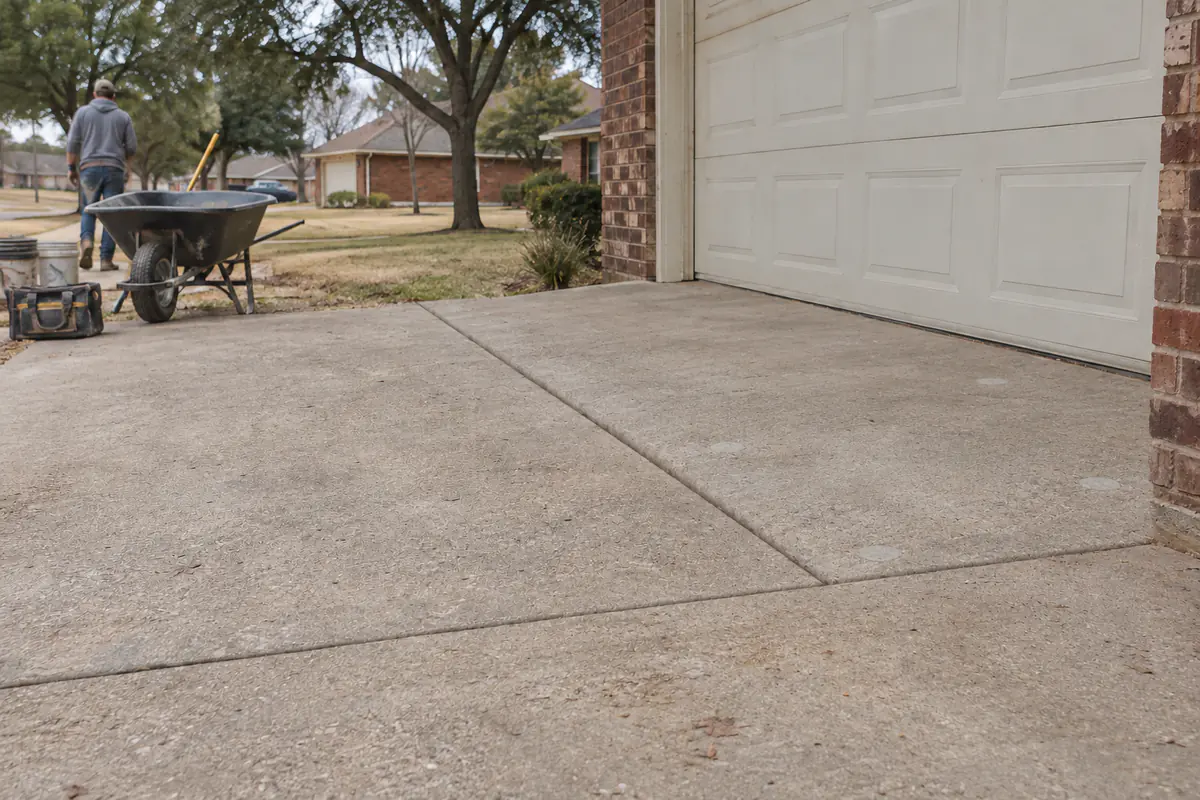
OKC Driveway Repair Co. provides driveway leveling across Oklahoma City, lifting sunken concrete panels back to grade without tearing them out. Driveway leveling costs about $3 to $15 per square foot in the metro: mudjacking at the low end and polyurethane foam at the high end. Most jobs are one to three panels and take a few hours. Searchers often call this sunken driveway repair; it is the same job, and the same page.
What happens on the first visit
- Measure the drop at every low joint, and check whether each panel is still in one piece.
- Probe for voids at the edges and joints to see how much material it will take.
- Find the water. Downspouts, slopes and open joints that soaked the base are what sank the slab, and they are part of the quote.
- Quote both methods side by side where both will work, so you can choose.
Two ways to lift a slab
Polyurethane foam
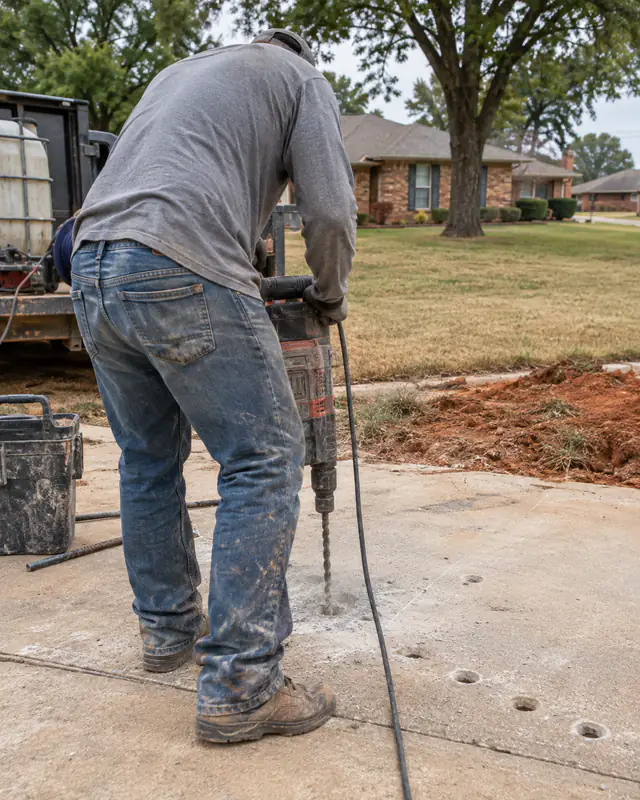
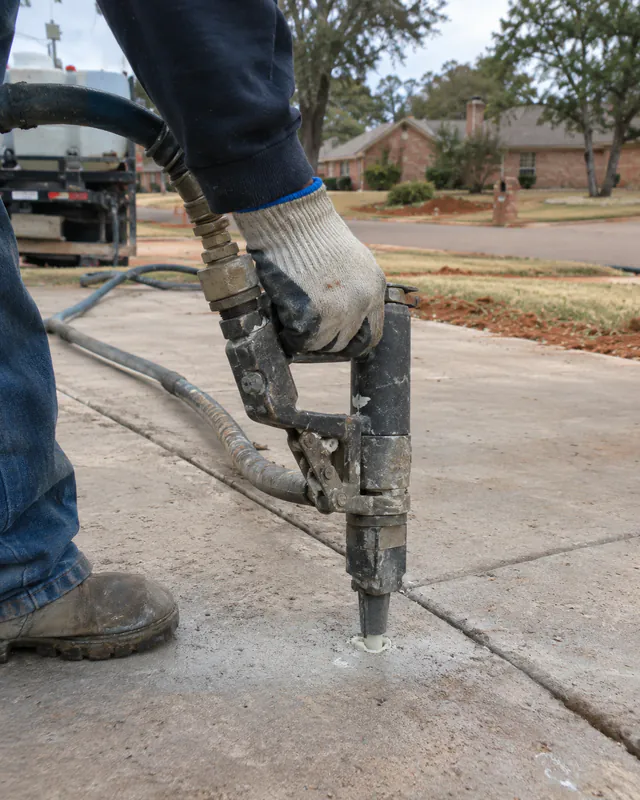
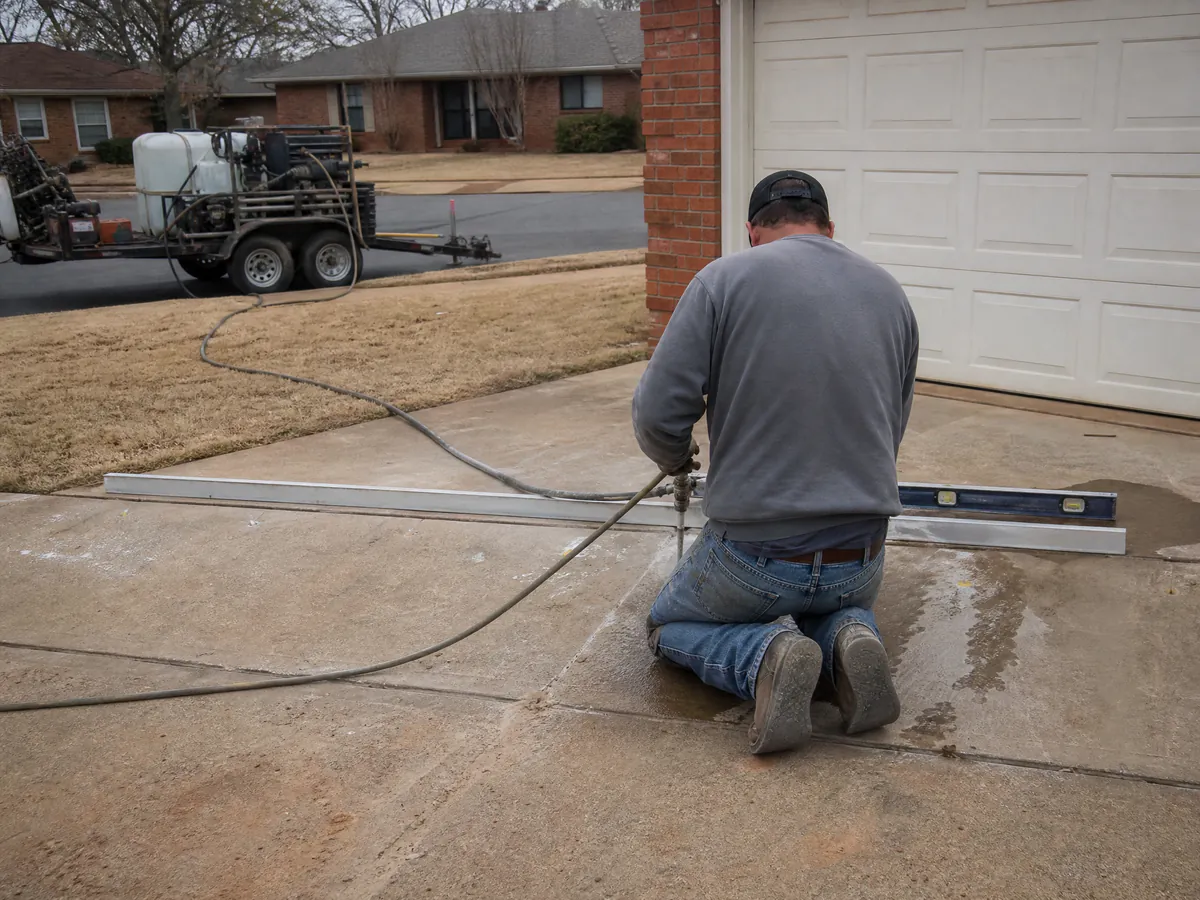
We drill ⅝-inch ports and inject a two-part foam that expands under the slab and lifts it. Lifting foam weighs only a few pounds per cubic foot, so it adds almost no load to soft clay, and it cures fast enough to drive on within about an hour. HomeServe puts foam leveling at roughly $5 to $25 per square foot nationally; in Oklahoma City our typical range is $6 to $15. Inch Calculator’s 2026 guide prices a 100-square-foot foam lift at about $2,000 to $2,500 against $300 to $800 for mudjacking the same area.
Mudjacking
Mudjacking, also called slabjacking, pumps a cement-and-soil slurry through holes about 1½ inches across. It costs about half as much as foam, $3 to $6 per square foot, and works well where the soil under the slab is firm and the drop came from a void. The slurry is heavy, so on soft, wet clay it can add to the settling it is meant to fix. It needs about a day to firm up before cars go back on.
Our foam leveling vs mudjacking guide compares them in detail.
Every lift ends the same way
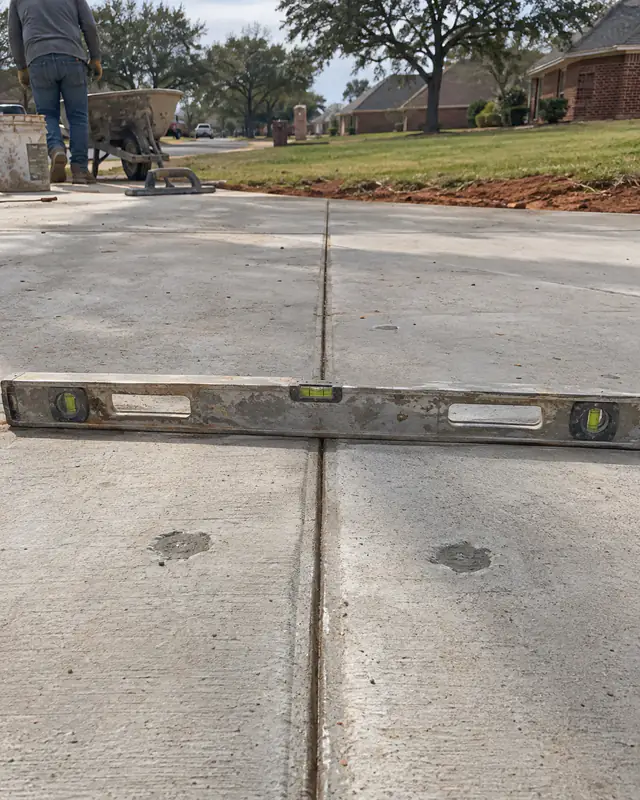
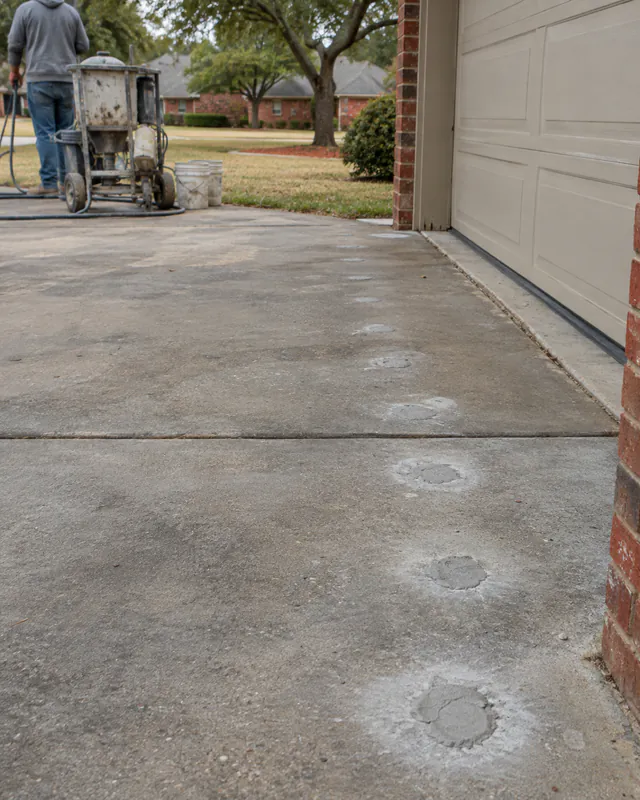
We lift slowly while watching a level or laser, stop at grade, patch the ports, and reseal the joints between the lifted panels with polyurethane. Leaving those joints open is the most common reason a lifted panel drops again.
Why Oklahoma City driveways sink
Three things sink most drives in the metro. First, shrink-swell clay: the Kirkland and Renfrow soils under much of the area pull away from the slab in drought and swell back when wet, leaving voids. Second, backfill: soil beside the house foundation and over utility trenches was dug out during construction and often refilled loosely, so it settles for years. Third, water: a downspout aimed at the drive or a slope that sends runoff along its edge washes the base away. Our guide to why driveways sink goes deeper on each.
When leveling is the wrong fix
Leveling works on panels that dropped but stayed whole. It is the wrong fix for panels broken into several pieces, for slabs pinned against the garage floor, and for drops of several inches with large voids that need the base rebuilt. The garage junction is its own case, covered on our driveway sinking at garage page, and erosion voids are covered under washout repair. Lifts of under an inch on a sound panel can sometimes just be ground to a bevel.
Paying for it
Leveling is quoted per panel or per square foot in writing before we drill. Homeowners policies usually exclude settling and soil movement, so most leveling is paid out of pocket; it is also usually the cheapest permanent fix for a sunken slab. Our driveway leveling cost guide shows typical totals by job size.
What's included
- Free on-site measurement of every low panel
- Void and slope check before we quote
- Small drilled ports (⅝ inch for foam, about 1½ inch for mudjacking)
- Lift monitored with a level or laser as we inject
- Joints between lifted panels resealed with polyurethane
- Ports patched with color-matched grout
- Downspout and drainage notes so it doesn't sink again
- Drive back on it the same day with foam
Signs leveling will work
- A panel dropped below its neighbor but still in one piece
- A trip lip of ½ inch or more at a joint
- Water pooling on the drive or running toward the garage
- A gap opening between the drive and the garage or sidewalk
- Panels rocking slightly when a car rolls over them
Not sure which side of the line yours is on? The free driveway damage assessment takes about two minutes.
DIY vs the cheapest bid vs leveling done properly
A lift is only as good as what keeps water out from under it afterward.
| What matters | DIY patch | Cheapest bid | Done properly |
|---|---|---|---|
| Method | Shims, sand or a patch on top | Mudjacking everything, no matter the soil | Foam or mudjack chosen by soil, void size and budget |
| Holes | — | Large holes, poorly patched | ⅝-inch foam ports or 1½-inch mudjack ports, color-matched patch |
| Lift control | — | Pump until it looks right | Level or laser watched through the lift |
| Cracks | Ignored | Lift through them, crack gets worse | Cracked panels flagged for replacement instead |
| Joints | Left open | Left open | Resealed with polyurethane so water stays out |
| Cause | Not addressed | Not addressed | Downspouts and grading noted on the quote |