OKC Driveway Repair Co. is a concrete driveway repair contractor serving Oklahoma City and the metro. Concrete driveway repair means fixing the panels, cracks and joints that failed while keeping the rest of the slab, and for most drives it costs $250 to $2,500, a fraction of a full tear-out. We take small jobs: one broken panel, a crushed corner, a utility cut across the drive. If the damage has spread past what a repair can hold, we tell you that too.
What happens on the first visit
- Walk every panel. We note which ones are cracked, sunken, scaling or broken, and which are sound.
- Check what’s underneath. A steel probe at the low panels tells us whether there’s a void, soft clay, or a trench that was never compacted.
- Mark the cut lines. Replacement panels are cut at the existing joint lines so the repair looks like a planned panel, not a patch.
- Quote line by line. Each panel, crack and joint is priced separately, so you can fix the urgent ones now and the rest later.
Repair the panels that failed
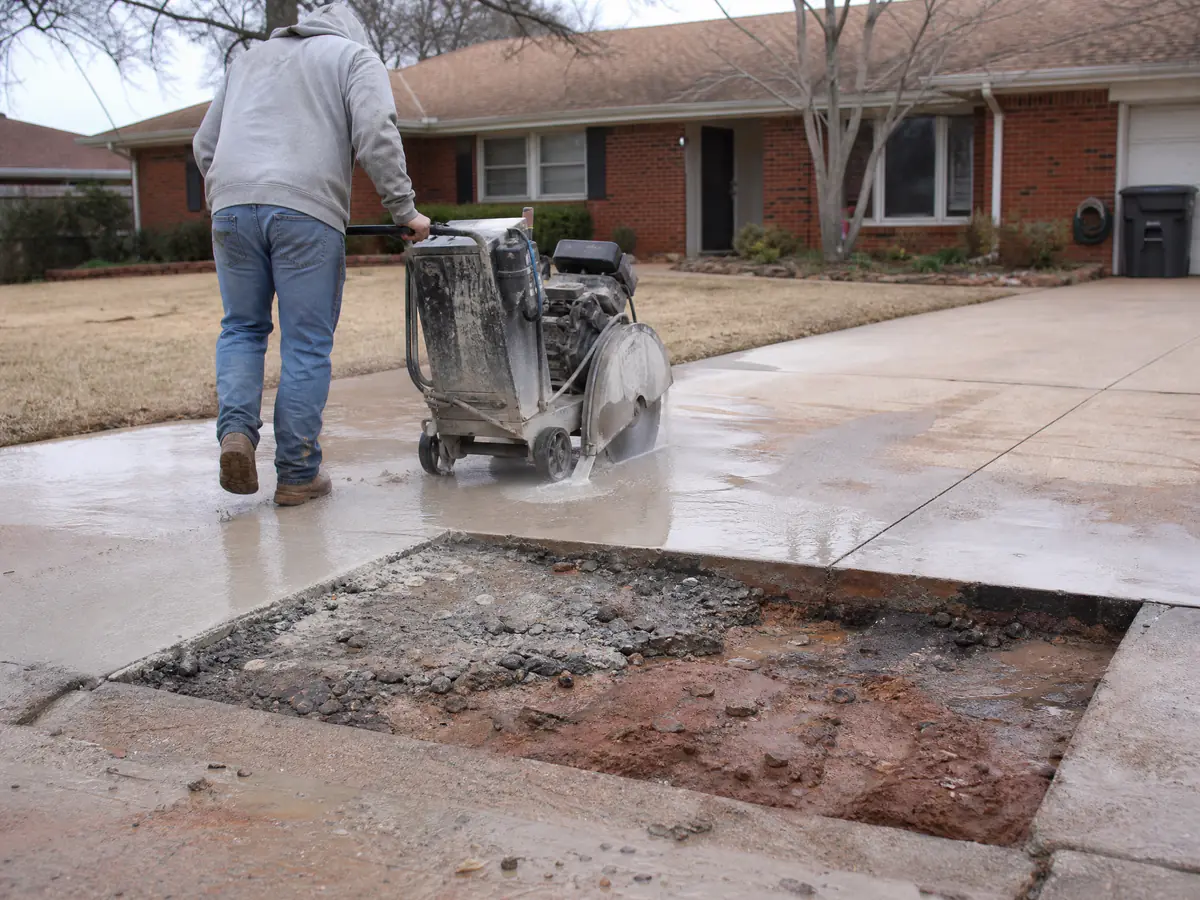
Saw-cut panel replacement
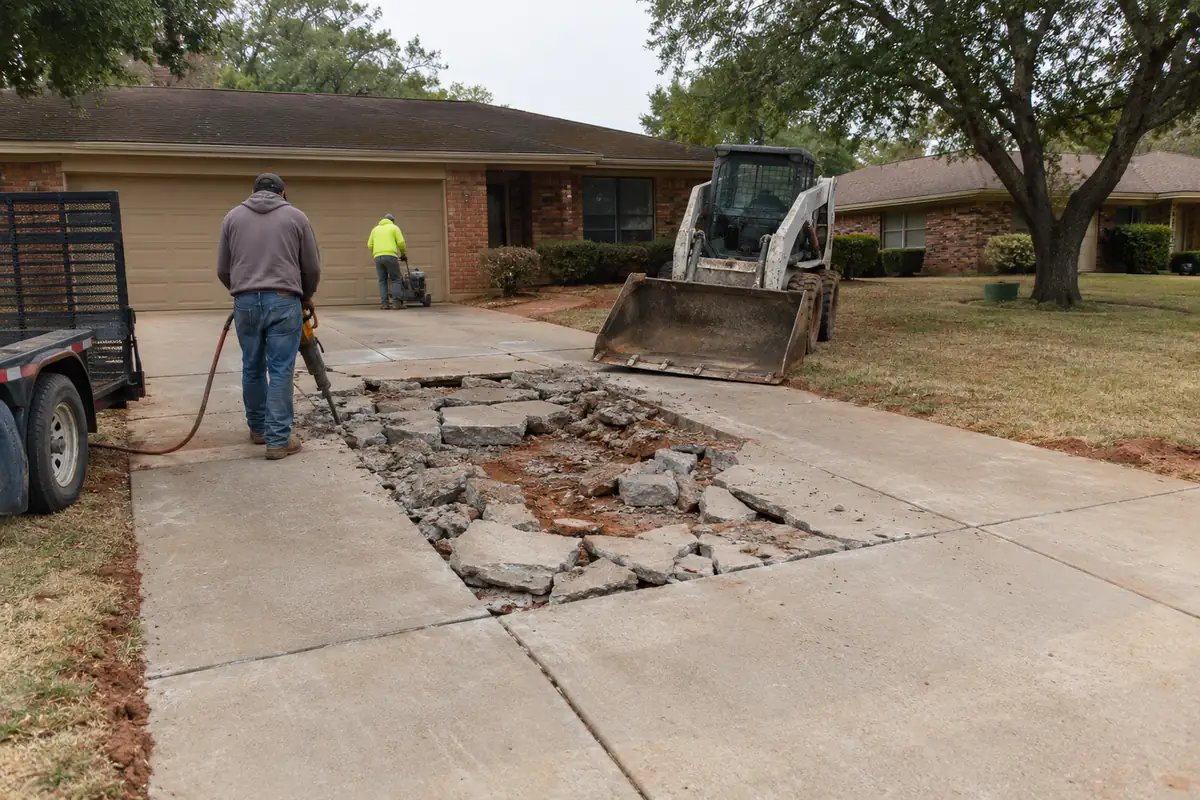
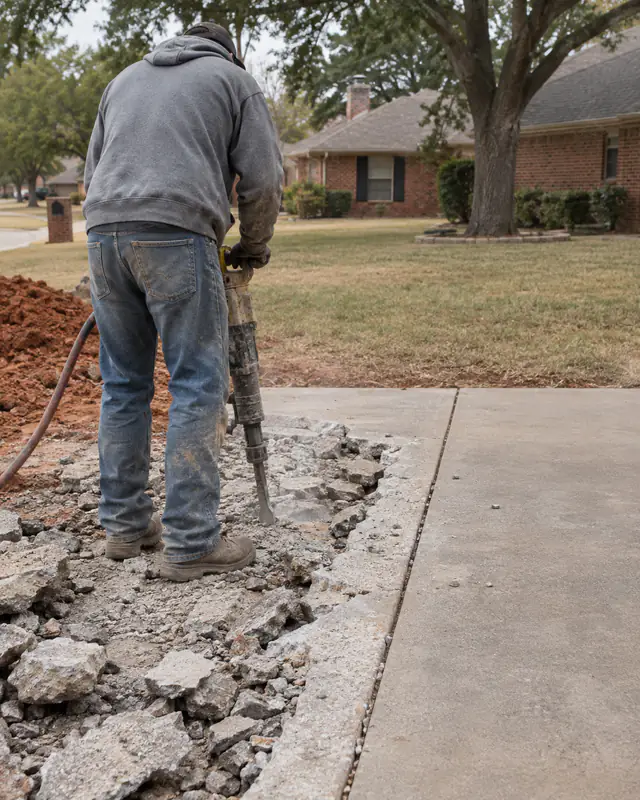
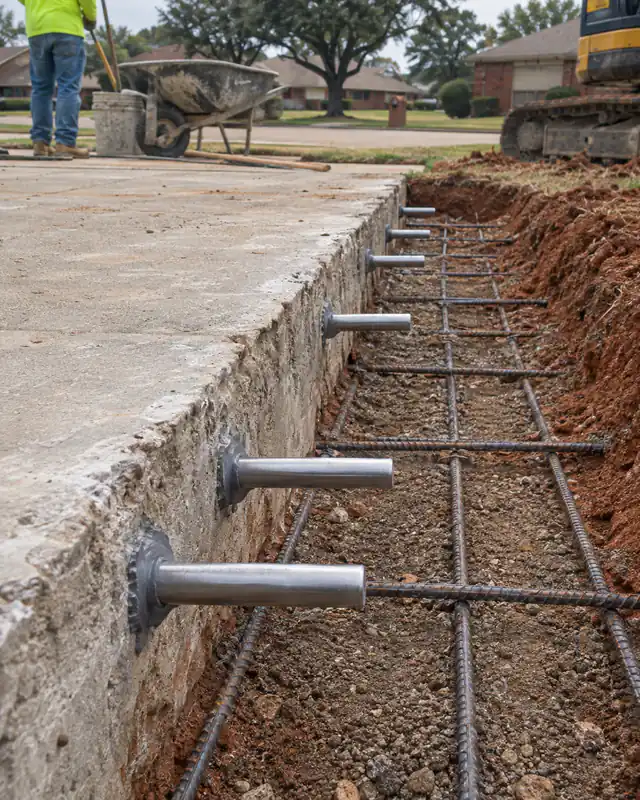
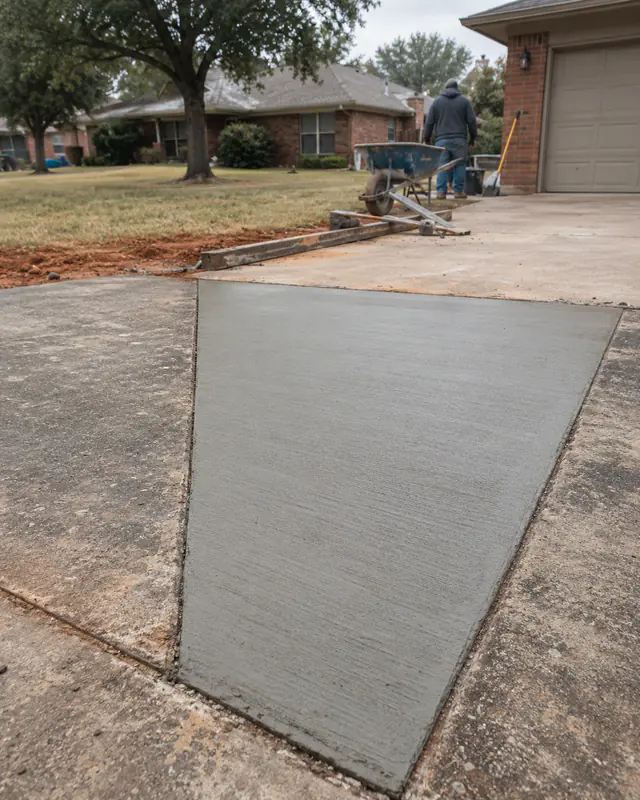
A broken panel is cut out full depth at its joints, broken up and hauled to a recycler. We check the subgrade, dig out anything soft, and replace it with compacted crushed stone. Then we drill smooth steel dowels into the faces of the neighboring panels. Dowels carry wheel loads across the joint, so the new panel and the old ones move together. Without them, a replaced panel on clay often ends up a half inch higher or lower than its neighbor within a few seasons.
The new panel is 4,000+ psi air-entrained concrete poured at least as thick as the old slab, with a broom finish matched to the drive. Cars stay off it for 7 days.
Crack and joint work
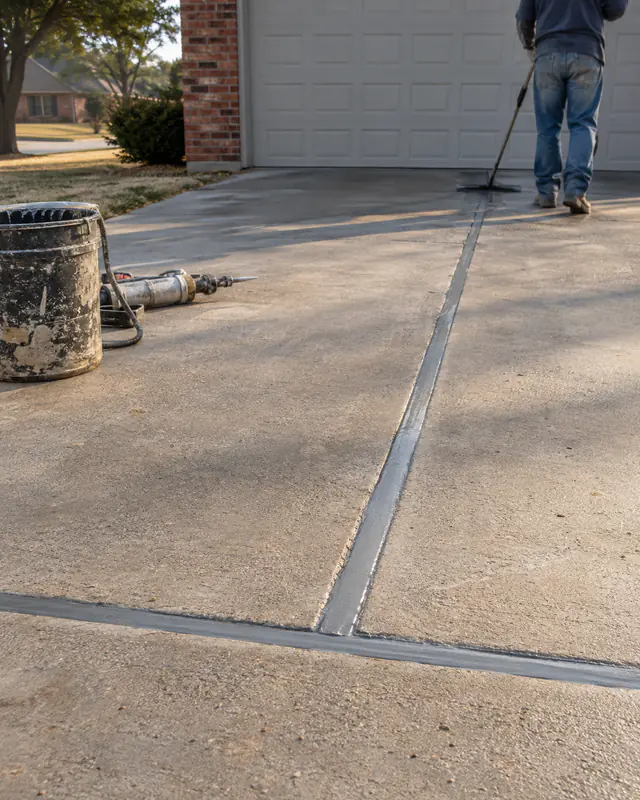
Cracks under ¼ inch with both sides level don’t need new concrete. We rout them, set backer rod and seal them with flexible polyurethane; the details are on our driveway crack repair page. Rotted wood expansion strips get pulled and replaced the same way, covered on the expansion joint repair page.
Edges and corners
Corners break where tires turn off the drive and where the slab was poured thin at the edge. We cut back to sound concrete, add dowels and pour a thickened edge so it doesn’t break in the same spot again.
Why concrete breaks in Oklahoma City
Most of the metro sits on red Permian clays like the Kirkland series, which the USDA soil survey rates high for shrink-swell. The clay shrinks away from the slab in dry summers and swells back in wet springs, so panels lose support unevenly and crack across. Water makes it worse. Every open crack and rotted joint lets rain into the base, and Oklahoma City averages 71 days a year at or below freezing (NWS normals), which means water in those cracks freezes and thaws many times each winter.
That is why the order of repairs matters. Sealing the cracks and joints that are still sound is the cheapest thing you can do to keep a small repair from becoming a large one.
When repair stops making sense
Repair is the better value while the damage is limited to a few panels. Once more than about a third of the drive is cracked, sunken or scaling, patch after patch costs more than starting over. If panels have only dropped and are still in one piece, driveway leveling lifts them back for less than a re-pour. Our repair-or-replace guide walks through the cutoffs with real numbers, and the free damage assessment sorts your drive in about two minutes.
Paying for it
The estimate is free and written. Small repairs carry a minimum of about $250 to cover the trip, the saw and cleanup, and the quote says so before you book. Most policies exclude cracking from settling, soil movement and wear, but sudden damage from a vehicle or a falling tree may be covered. Our guide to whether homeowners insurance covers driveway damage explains the difference, and we provide photos and measurements for any claim.
What's included
- Free on-site look and written, itemized quote
- 811 utility locate before any saw-cutting
- Full-depth saw cuts at the joint lines, not mid-panel
- Break-out, haul-off and concrete recycling
- Subgrade checked and soft spots replaced with stone
- Smooth dowels drilled into the old slab at each new joint
- 4,000+ psi air-entrained concrete, matched to the old thickness
- Broom finish matched to the existing drive, joints sealed
Signs a concrete repair will hold
- Damage limited to one to three panels
- Cracks under ¼ inch with both sides still level
- A broken corner or edge where cars turn
- Joint sealant or wood strips missing, the panels themselves sound
- A single panel cut out by a utility or plumbing repair
Not sure which side of the line yours is on? The free driveway damage assessment takes about two minutes.
DIY patch vs the cheapest bid vs a driveway done properly
Most failed OKC drives didn't fail because of the concrete. They failed because of what's under it and what was skipped. Here's what to look for on any quote.
| What matters | DIY patch | Cheapest bid | Done properly |
|---|---|---|---|
| Base | Patches over whatever is there | Native clay graded flat, little or no stone | Soft clay dug out; 4–6 in. compacted crushed stone |
| Concrete | Bagged mix, hand-mixed, no air | Spec not on the quote | 4,000–4,500 psi air-entrained ready-mix, in writing |
| Thickness | Whatever the bags cover | 4 in., often thinner at edges | 5 in. with thickened edges |
| Reinforcement | None | Mesh lying on the dirt | #3 rebar on chairs; dowels into old concrete |
| Joints | None | Tooled late or skipped | Saw-cut within 24 h to ¼ depth, ~10 ft apart; ½ in. expansion joints |
| Curing | Left to dry | Left to dry | Membrane curing compound; no cars for 7 days |
| Permit at the street | Skipped | Often skipped | Pulled per OKC Code §50-116 |
| Quote | — | One number, verbal | Written, itemized, per square foot |