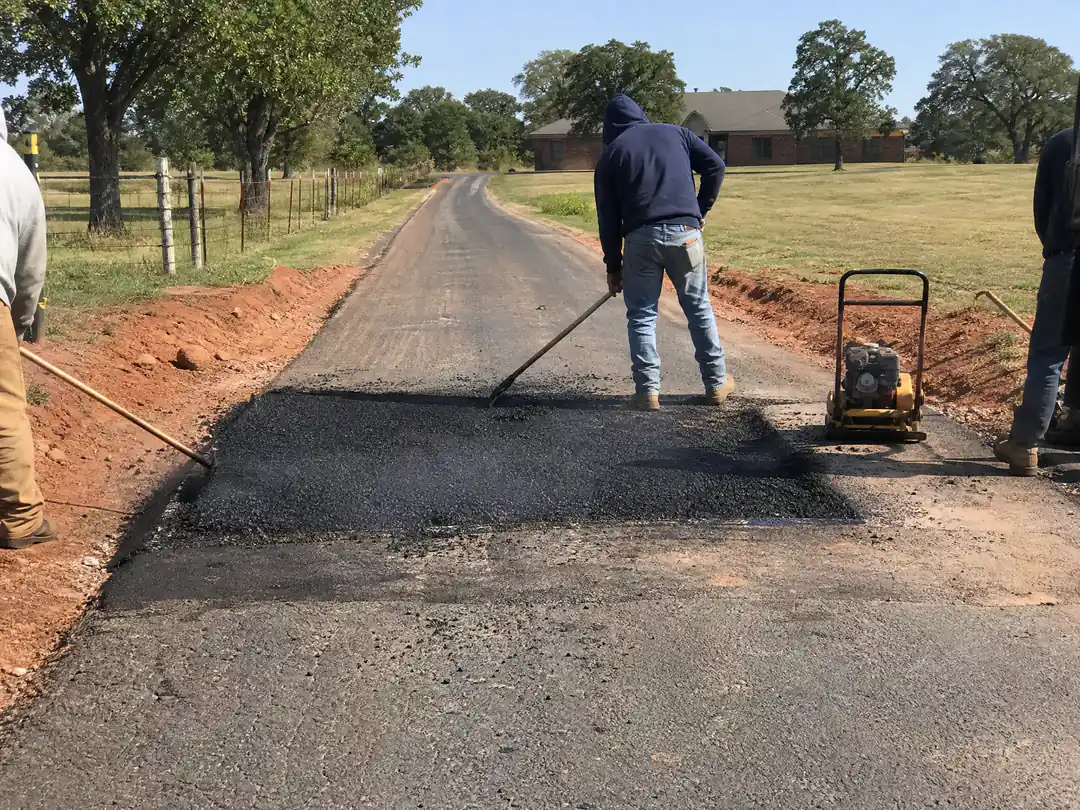
OKC Driveway Repair Co. handles asphalt driveway repair in Oklahoma City and across the metro, from a single pothole in town to long blacktop drives on acreage lots. Asphalt driveway repair here typically runs $1,000 to $3,800 per job; HomeAdvisor’s Oklahoma City data has put the average around $2,400. Most of the asphalt companies in town chase commercial paving. We focus on fixing residential drives so they last.
What happens on the first visit
- Walk the whole drive, including the edges where it meets grass, gravel or a ditch.
- Find the soft spots. Alligator cracking and potholes almost always mean the base under that spot is wet or thin.
- Mark every patch on the pavement with paint so you can see exactly what you’re paying for.
- Quote patching and crack fill separately, plus a note on when sealcoating would pay off.
How asphalt fails in Oklahoma
Asphalt is stone held together by a petroleum binder, and the binder is what wears out. Oklahoma City’s summers are hard on it: the city’s record high is 113°F, and it has seen as many as 63 days over 100°F in a single year (2011). Heat and sun oxidize the binder, so the surface turns gray, gets brittle and starts to ravel. Winter finishes the job. The city averages 71 days a year at or below freezing, and water in surface cracks freezes and pries them open.
Once water gets through the surface, the base under it softens. Cars then flex the asphalt over the soft spot, and it breaks into a pattern of small blocks called alligator cracking. Leave that through one more wet season and it becomes a pothole. On long acreage drives, the edges fail first because nothing holds them up on the sides.
The repairs we do
Full-depth patches
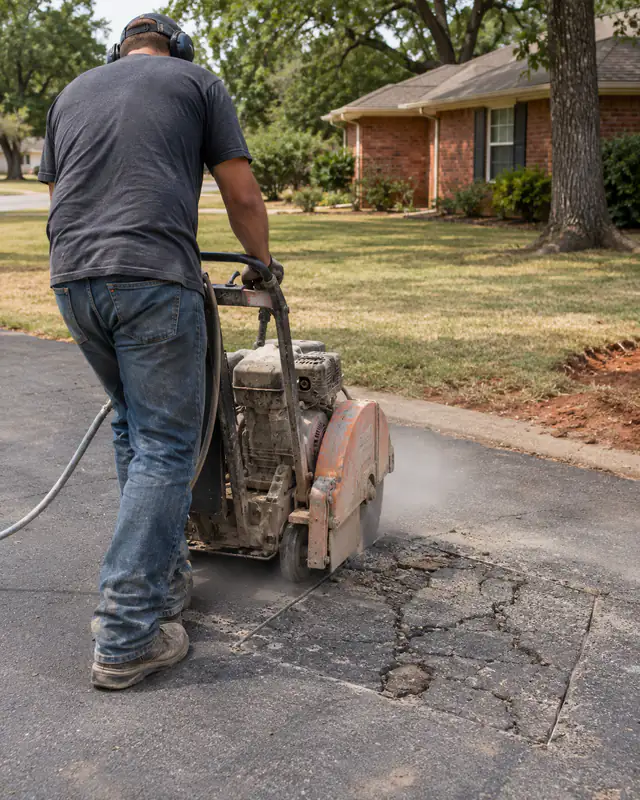
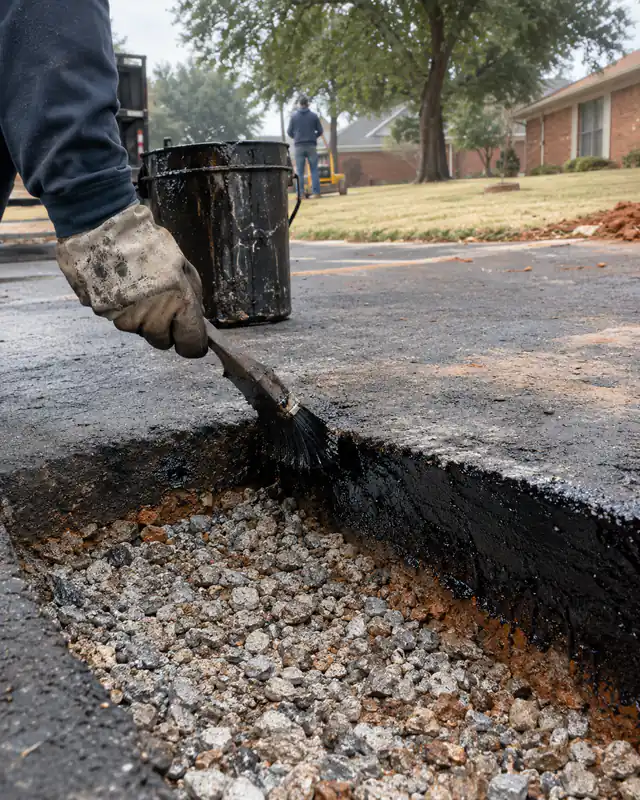
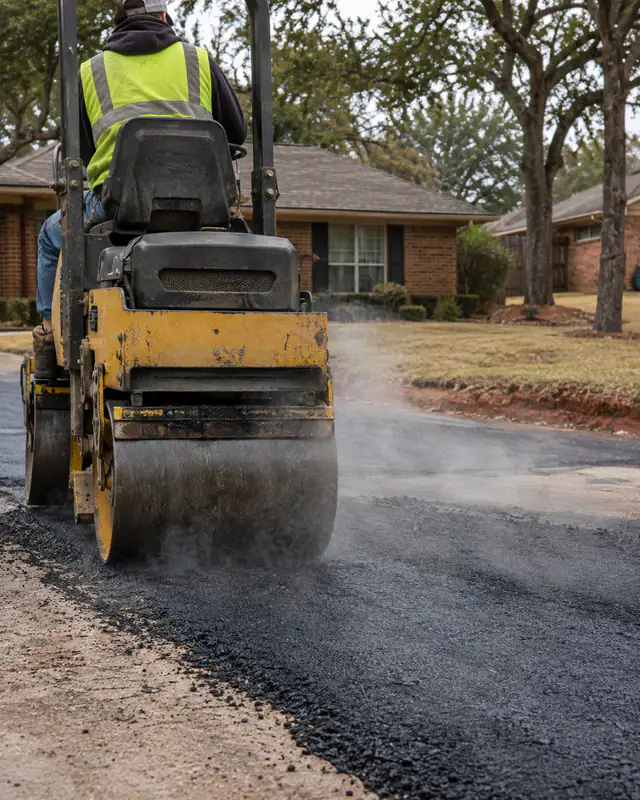
Failed areas are saw-cut square back to sound pavement. We dig out all of the broken asphalt and any wet base, recompact the base and add crushed stone where it is thin. The cut edges get a tack coat so the new asphalt bonds to the old, and hot-mix asphalt goes in and is rolled in layers. A skin patch over alligator cracking breaks up again in a season. A full-depth patch fixes the reason it broke.
Potholes and edges
Potholes get the same full-depth treatment at a smaller size. Crumbling edges are cut back, the soil shoulder is rebuilt or replaced with compacted stone so the edge has support, and new asphalt is placed and rolled against it.
Hot-pour crack fill
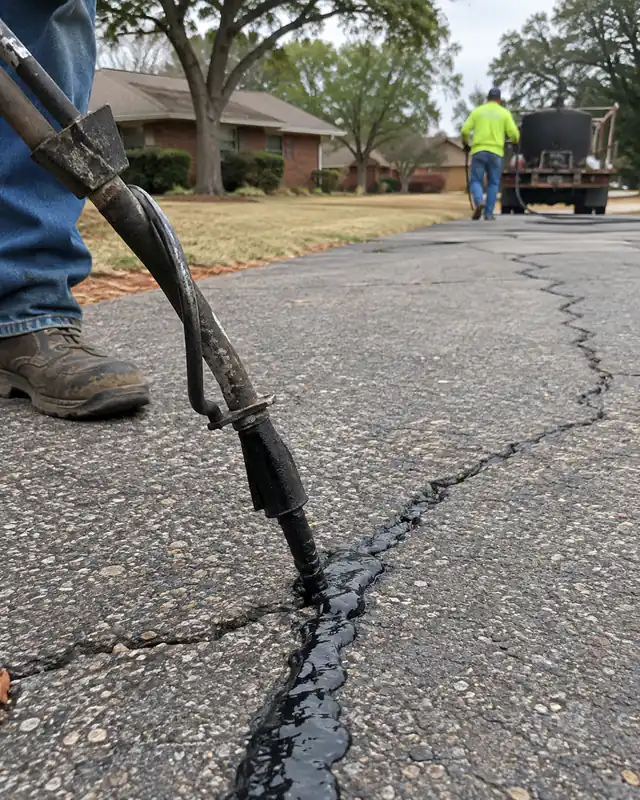
Cracks wider than about ⅛ inch are cleaned and filled with hot-pour rubberized filler, which stays flexible through Oklahoma’s swings between heat and cold. Pour-in bottle fillers from the hardware store shrink and pull out within a year.
Patch, overlay or replace
Patching is the right call when the failures are in a few spots and the rest of the surface is sound. When alligator cracking covers more than about a third of the drive, an overlay or replacement costs less over time. Asphalt lasts about 15 to 20 years with maintenance against 20 to 35 for concrete, according to LawnStarter’s 2026 guide. If you are replacing anyway, our concrete vs asphalt driveway guide compares them for Oklahoma, and driveway replacement covers the concrete option.
Once repairs are done, sealcoating every two to three years slows the oxidation that started the damage.
Paying for it
Every patch is measured and priced on a written quote before we start. Homeowners insurance usually treats asphalt wear as maintenance, so expect to pay out of pocket. Our asphalt driveway repair cost guide breaks down patching, crack filling, sealcoating and replacement prices for Oklahoma City.
What's included
- Free on-site look and written quote
- Failed areas saw-cut square to sound pavement
- Failed asphalt and wet base removed
- Base re-compacted, stone added where needed
- Tack coat on the cut edges
- Hot-mix asphalt placed and rolled in lifts
- Hot-pour rubberized filler in remaining cracks
- Edge support rebuilt where the drive meets soil
Signs your asphalt drive needs repair
- Alligator (spiderweb) cracking in wheel paths
- Potholes or soft spots that flex under a car
- Edges crumbling into the grass or ditch
- Cracks wider than ¼ inch
- Gray, raveling surface with loose stone
Not sure which side of the line yours is on? The free driveway damage assessment takes about two minutes.
DIY vs the cheapest bid vs asphalt repair done properly
Most asphalt patches fail at the edges or the base, not on top.
| What matters | DIY patch | Cheapest bid | Done properly |
|---|---|---|---|
| Cut | No cut, patch on top | Torn edges | Saw-cut square to sound pavement |
| Base | Not touched | Patched over wet base | Wet base removed, stone compacted |
| Material | Bagged cold patch | Thin skin of hot mix | Hot mix placed and rolled in lifts |
| Edges | Open | Open | Tack coat and sealed seams |
| Cracks | Pour-in filler | Skipped | Hot-pour rubberized filler |