OKC Driveway Repair Co. does driveway crack repair across Oklahoma City using routed cracks, backer rod and flexible polyurethane sealant. Driveway crack repair costs about $3 to $8 per linear foot in the metro, and most drives need 20 to 60 feet, so a typical job lands around $250 to $500. Sealing is the cheapest repair there is, and on clay soil it is the one that keeps small cracks from turning into sunken panels.
What happens on the first visit
- Measure every crack for length and width; a feeler gauge or a coin tells us which ones are still hairline.
- Check both sides. If one side is higher than the other, it is not a sealing job, and we say so.
- Look at the joints. Rotted wood strips and empty saw cuts let in as much water as the cracks do.
- Price per linear foot, with the small-job minimum shown up front.
How we seal a driveway crack
Rout
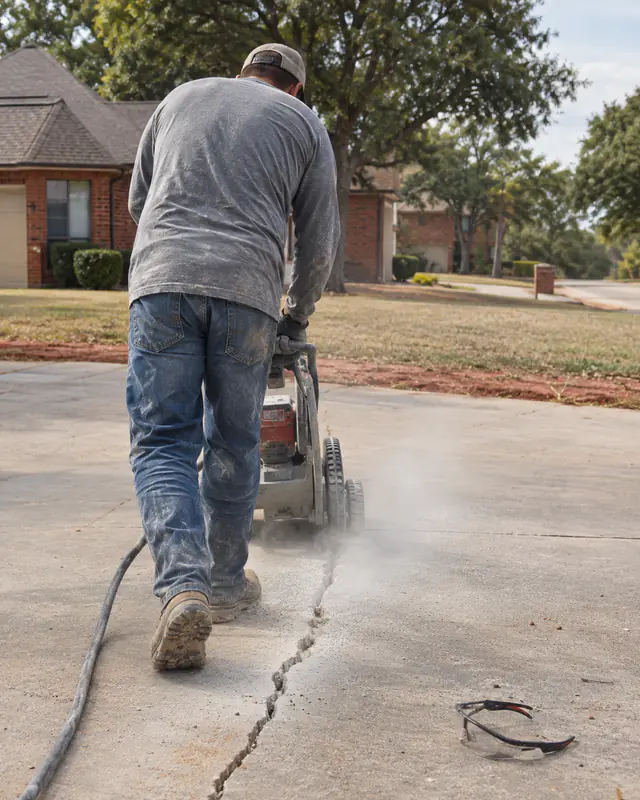
Hairline cracks are too narrow for sealant to grip. We run a crack-chasing blade along each one to cut a clean, square reservoir about ½ inch wide. That gives the sealant two solid faces to bond to and enough body to stretch.
Clean and rod
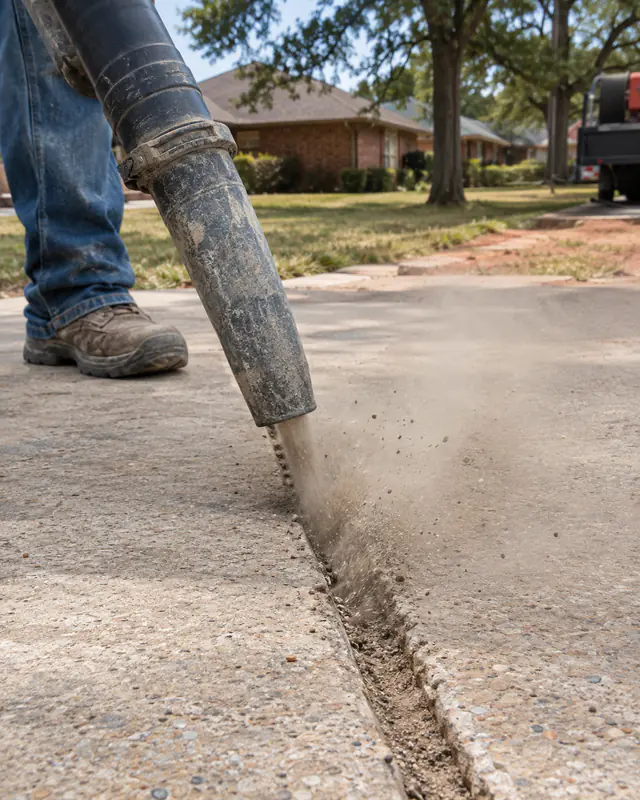
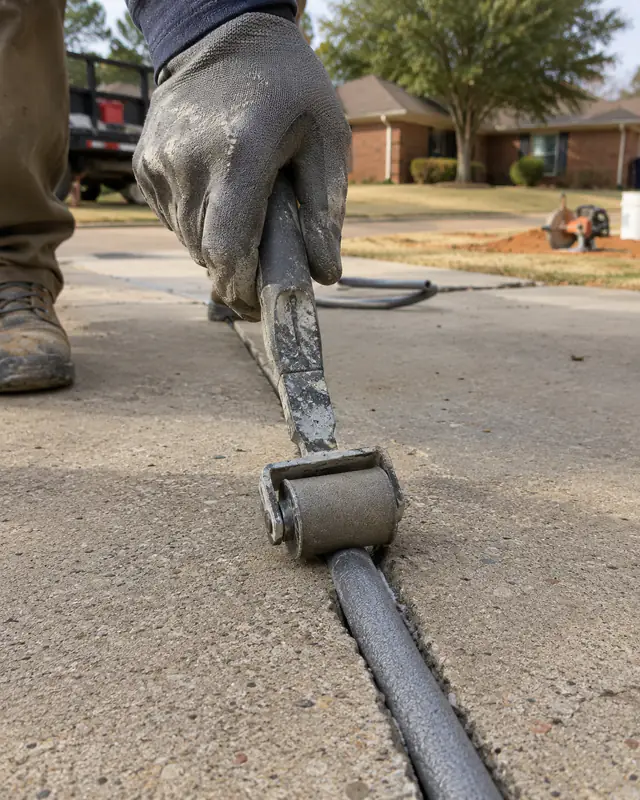
Dust and debris are blown out and the edges are dried. Then we press closed-cell backer rod into the crack at the right depth. The rod stops the sealant from bonding to the bottom of the crack, so it bonds only to the sides and can stretch like a rubber band when the crack opens in winter.
Seal
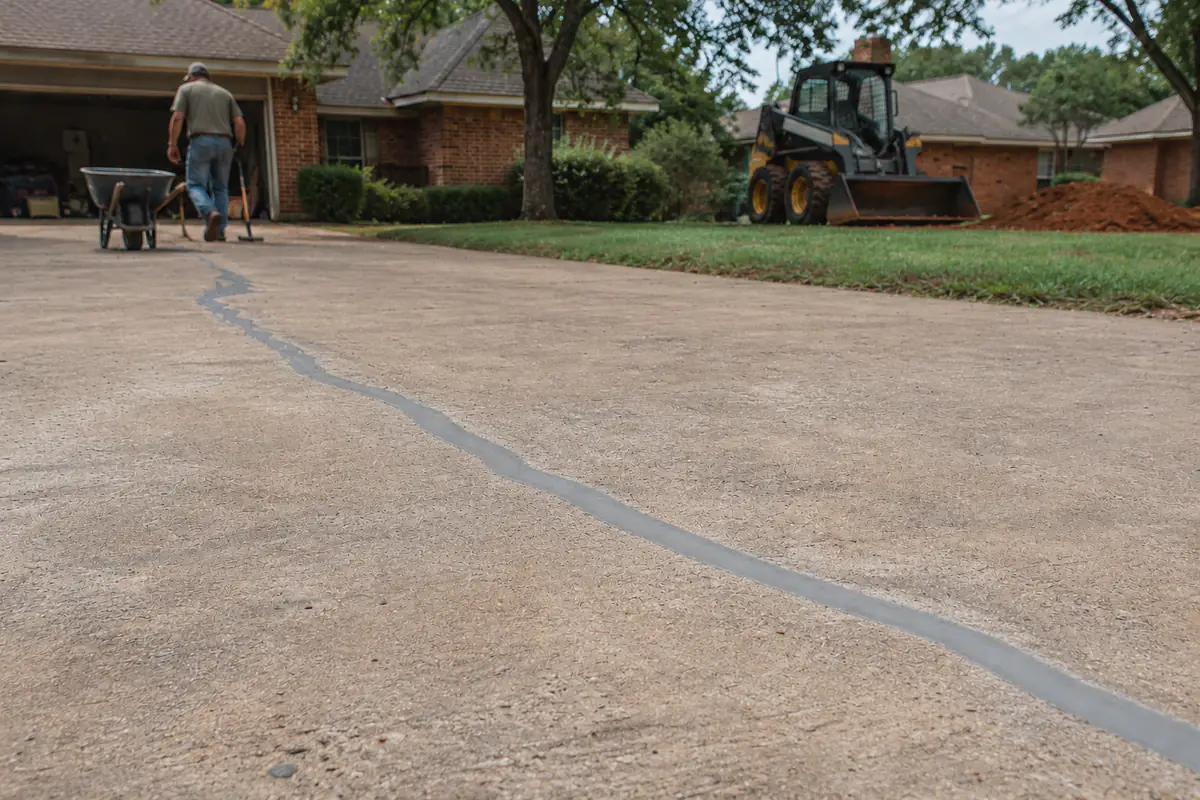
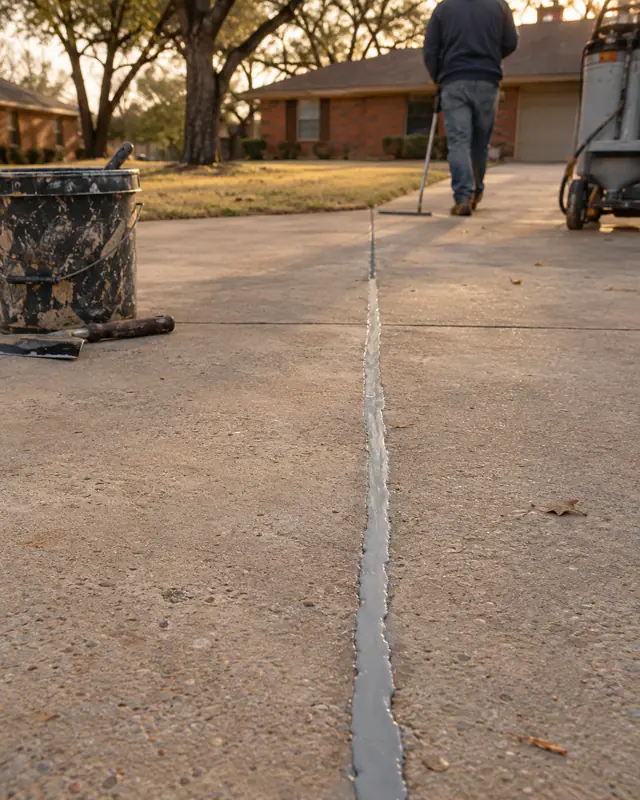
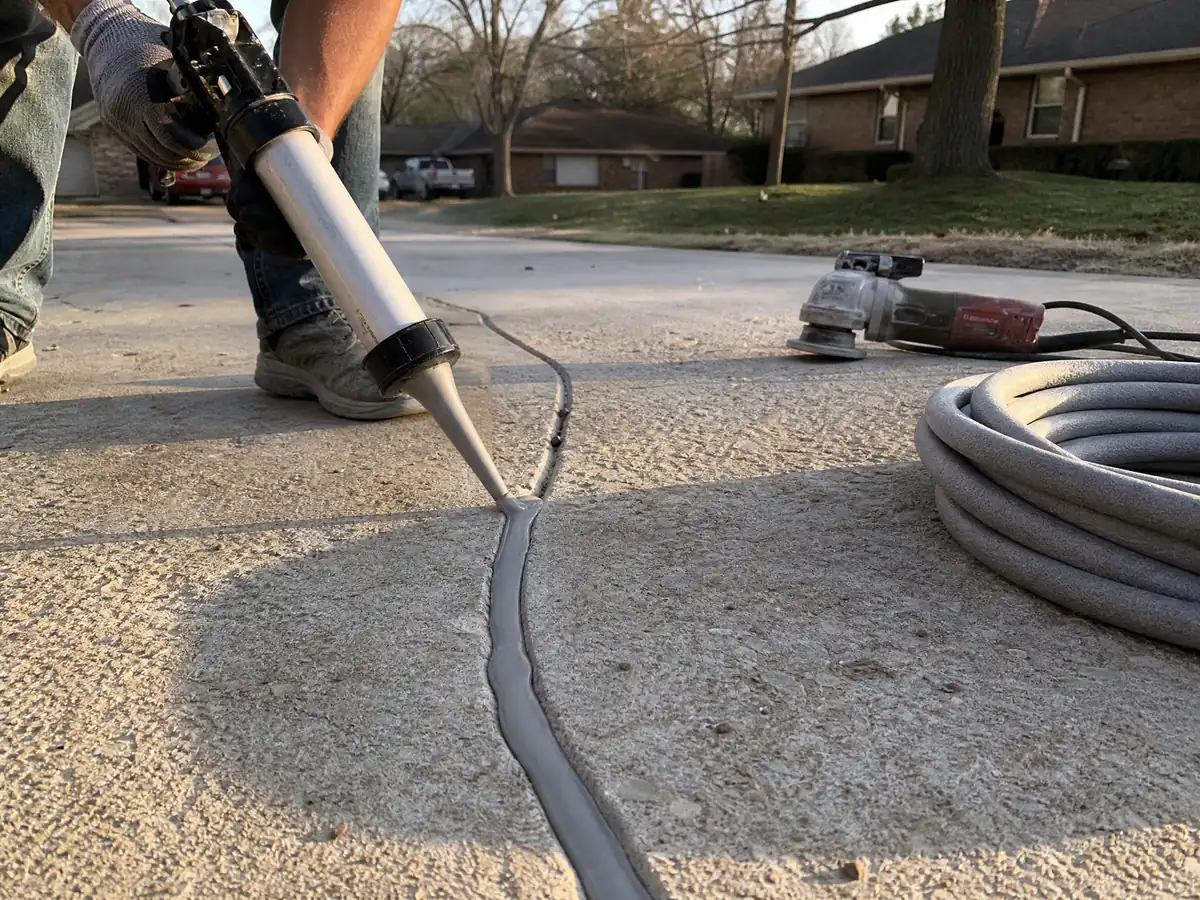
We fill with self-leveling polyurethane on flat drives and gun-grade polyurethane on slopes, tooled flush inside the crack. We don’t smear sealant across the surface: smeared sealant peels within a season and leaves a dark stripe. Foot traffic is fine in a few hours and cars the same day.
Which cracks matter in Oklahoma City
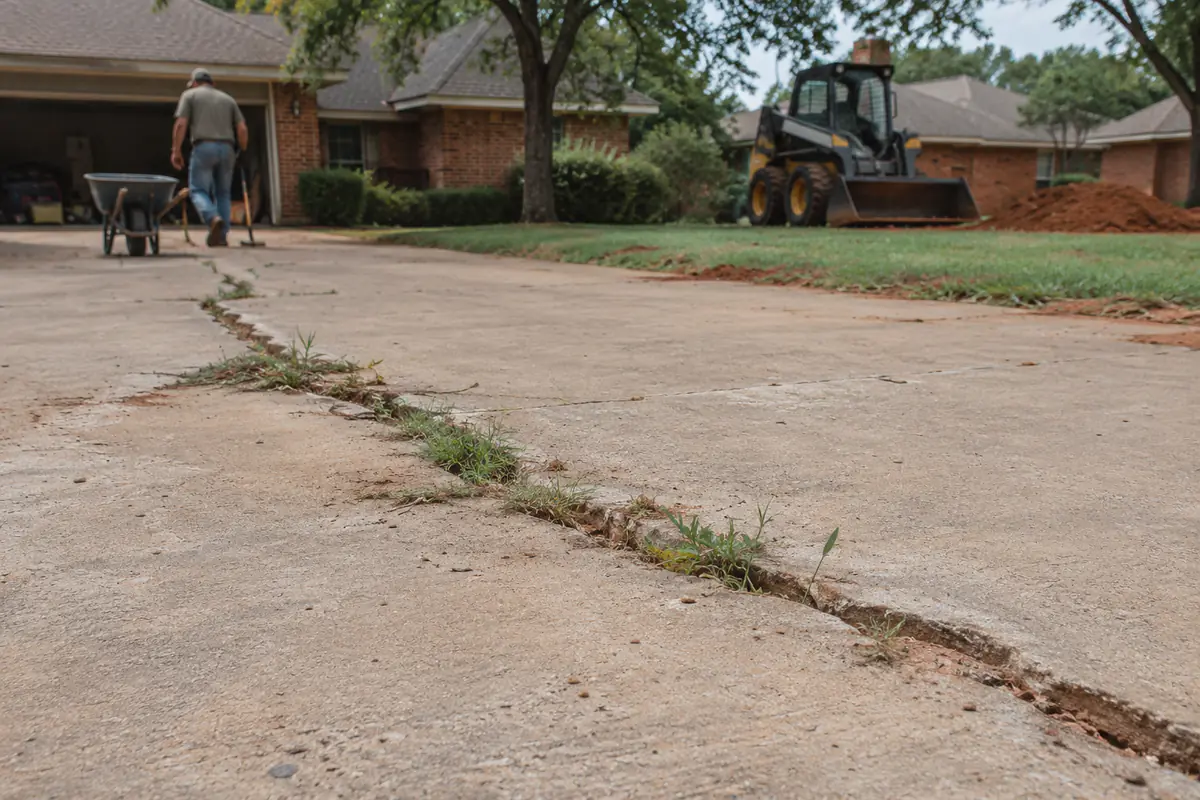
Not every crack is a problem. Concrete shrinks as it cures, and fine cracks are normal. In Oklahoma City the cracks to worry about are the ones that let water in. The metro’s red clays, such as the Kirkland series, are rated high for shrink-swell, so water that gets under the slab softens the base in spring and leaves voids when it dries in summer. With 71 days a year at or below freezing (NWS normals), water in an open crack also freezes and thaws many times each winter and pries the edges apart.
The ones that need more than sealant:
- Wider than ¼ inch, or growing every season.
- Stepped, with one side higher than the other. That is settling; see driveway leveling.
- Spiderweb cracking in one area, a sign the base under that panel has failed. That panel needs replacement.
Worried that cracks in the drive mean something worse? Our guide on whether a cracked driveway means foundation problems explains what to check at the house.
Paying for it
Crack sealing is priced per linear foot with a small-job minimum of about $250. The cost to fix cracks in a driveway guide breaks down DIY, sealing and panel replacement side by side. Insurance almost never covers cracking from shrinkage or settling, which is one more reason to keep this repair small and cheap.
What's included
- Every crack measured and mapped on the quote
- Cracks routed to a clean, square reservoir
- Debris blown out and edges dried
- Closed-cell backer rod set at the right depth
- Self-leveling or gun-grade polyurethane sealant
- Sealant tooled flush, not smeared across the surface
- Wider or stepped cracks flagged for panel repair instead
- Traffic back on it the same day
Signs crack sealing is the right fix
- Cracks under ¼ inch wide
- Both sides of the crack at the same height
- Weeds or grass growing out of a crack
- Old caulk that has split or pulled away
- Hairline cracks that open in winter and close in summer
Not sure which side of the line yours is on? The free driveway damage assessment takes about two minutes.
DIY vs the cheapest bid vs crack repair done properly
The sealant matters less than how the crack is prepared for it.
| What matters | DIY patch | Cheapest bid | Done properly |
|---|---|---|---|
| Prep | None, sealant over dirt | Blown out, not routed | Routed to a clean, square reservoir |
| Backer rod | None | None | Closed-cell rod at the correct depth |
| Sealant | Hardware-store caulk or acrylic | Rigid filler that cracks | Flexible polyurethane rated for movement |
| Finish | Smeared across the surface | Smeared across the surface | Tooled flush inside the crack |
| Wide or stepped cracks | Filled anyway | Filled anyway | Flagged for panel repair or leveling |