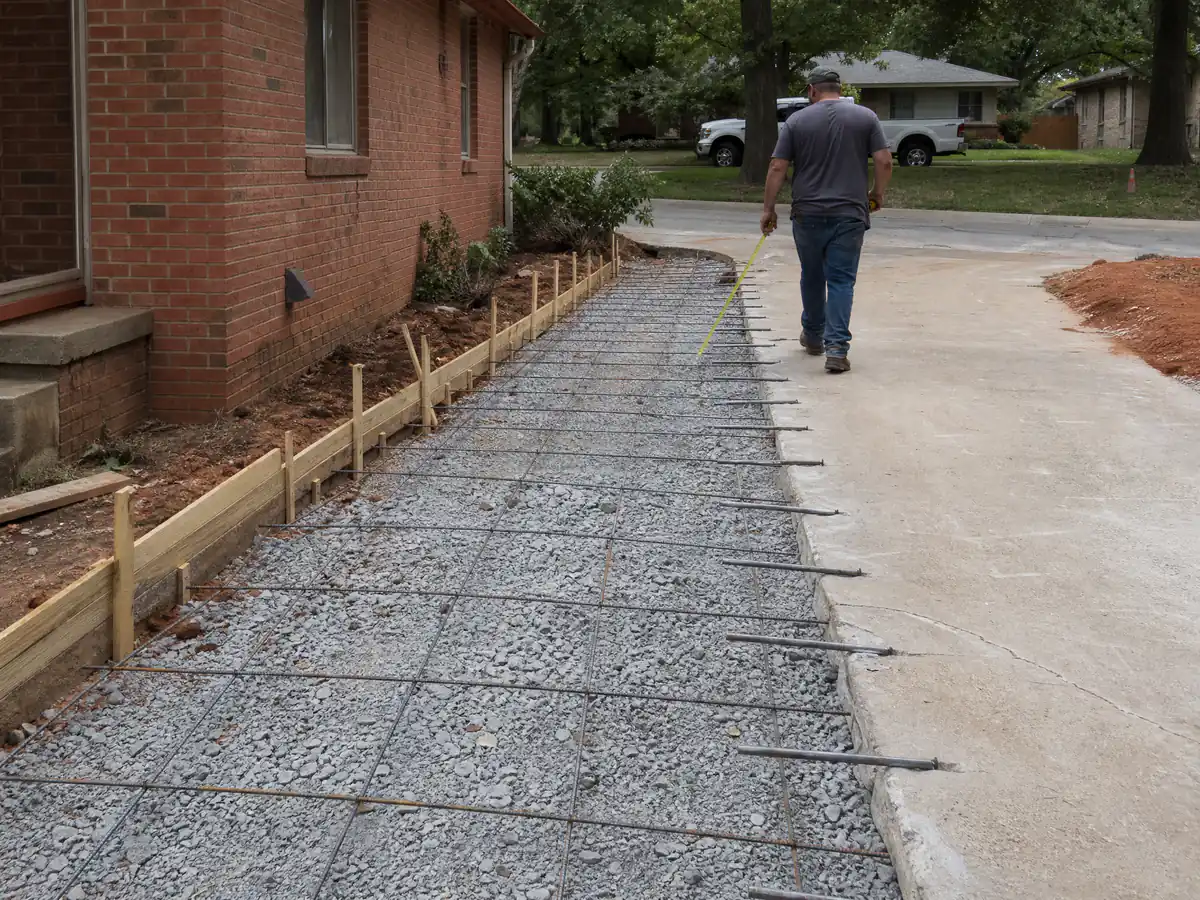
OKC Driveway Repair Co. builds driveway extensions across Oklahoma City: widening single-car drives, adding parking pads, and pouring RV and trailer slabs. A driveway extension costs about $7 to $11 per square foot in the metro. That’s slightly less per foot than a replacement because there’s nothing to tear out. The new slab is doweled into the old one so the seam between them stays flat.
What happens on the first visit
- Mark the layout with paint or stakes so you can see the new width before you commit.
- Check the existing slab. A cracked or sunken drive is a poor anchor; we may suggest fixing it first or replacing it at the same time.
- Check drainage and setbacks. More concrete means more runoff, and it has to go somewhere other than your foundation or your neighbor’s yard.
- Note what will park on it. A second car, a boat and a 30-foot RV need different slabs.
The seam is the whole job
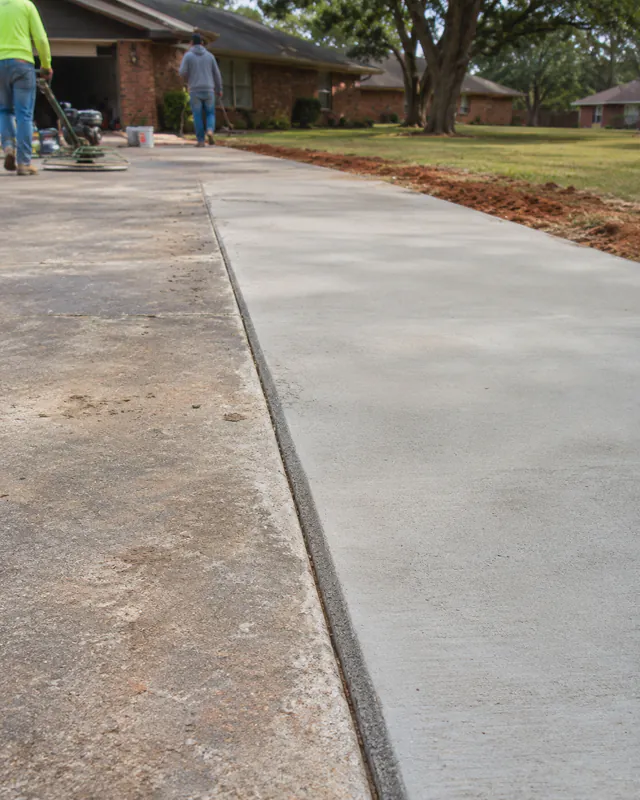
Most widened drives fail along the line where new concrete meets old. The clay under the two slabs doesn’t move identically, so without a connection one side rises or drops and the seam becomes a trip edge that breaks at the corners.
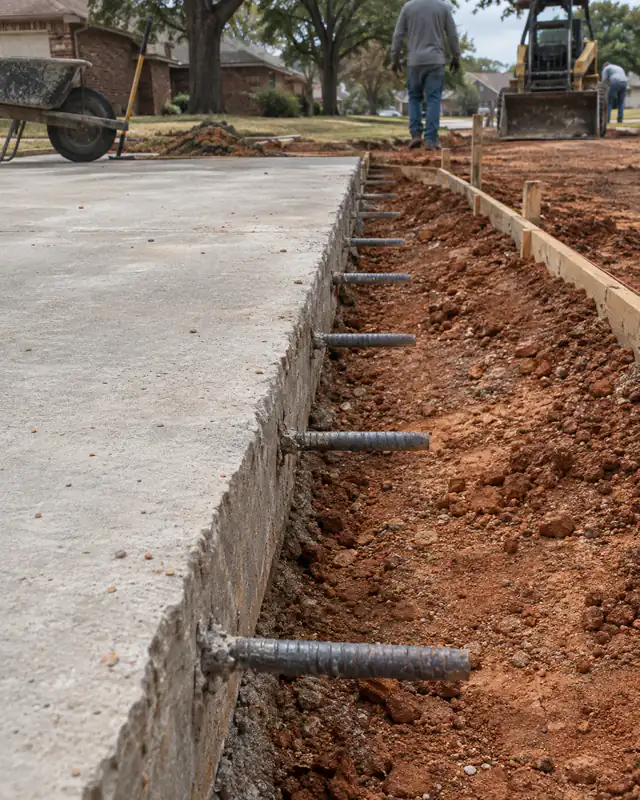
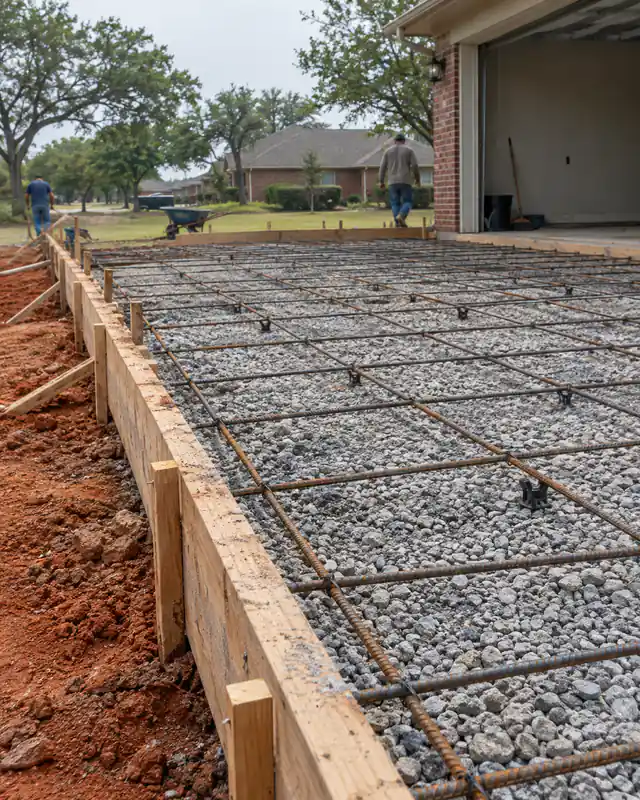
We drill into the edge of the existing slab and epoxy in smooth steel dowels, typically every 12 to 18 inches. The dowels let the joint open and close with temperature but keep both sides at the same height. The new slab gets the same build as our replacement driveways: 4 to 6 inches of compacted crushed-stone base, #3 rebar on chairs, and 4,000 to 4,500 psi air-entrained concrete, with saw-cut control joints lined up with the old ones and the seam sealed with polyurethane.
Parking pads and RV slabs
A side parking pad for a second car is built like the drive itself. An RV or heavy trailer pad is different: the load sits on a few tires and leveling jacks, and Oklahoma clay loses strength when it is wet. We pour those at 6 inches over a thicker stone base and keep RVs off the new slab for 28 days, the point at which concrete reaches its design strength.
Many of the metro’s older neighborhoods, from Midwest City’s 1940s Tinker-era homes to Del City and Bethany, were built with single-car drives that now serve two- and three-car households, which is where most widening jobs start.
Permits, setbacks and drainage
If the extension widens the curb cut or the approach, it is right-of-way work: Oklahoma City Code §50-116 requires a permit and §50-117 limits it to licensed sidewalk and paving contractors. We pull it. Widening only on your own lot usually doesn’t touch the approach, but zoning setbacks and drainage still apply, and many HOAs want to approve the plan first. Our driveway permit guide has the details; if the approach also needs widening, see driveway apron repair.
Paying for it
Extensions are quoted per square foot, with any approach work and permit as separate lines. The driveway replacement cost guide explains each line item, and the same base, steel and concrete numbers apply here, minus the tear-out.
What's included
- Layout checked against setbacks and drainage
- Okie811 utility locate
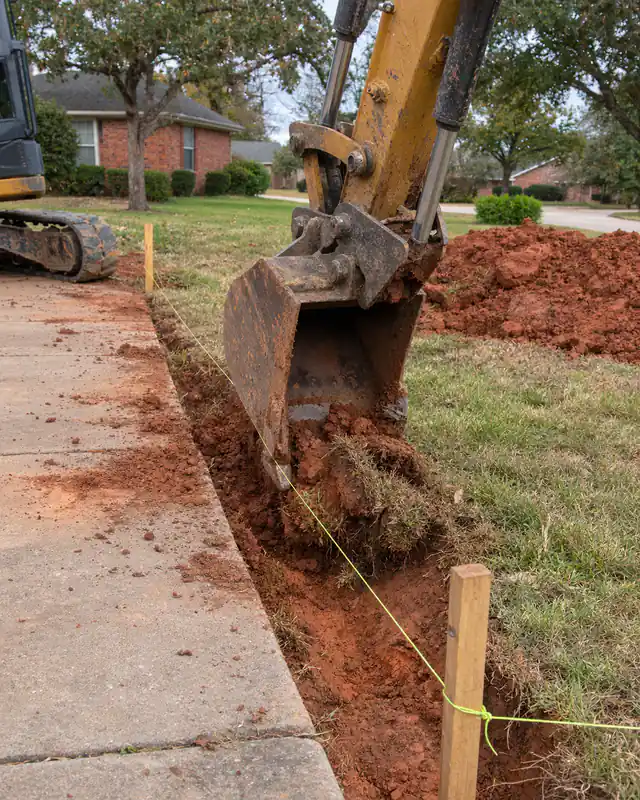
- Sod and clay excavated to grade
- 4–6 inches of compacted crushed-stone base
- Smooth dowels drilled and epoxied into the existing slab
- #3 rebar on chairs; thicker slab for RV pads
- 4,000–4,500 psi air-entrained concrete
- Saw-cut control joints and a sealed seam at the old slab
Signs an extension makes sense
- Cars parked half on the grass or in the street
- A single-car drive serving a two-car household
- A boat, trailer or RV with no level spot to park
- Ruts and mud where cars already pull off the drive
- An existing slab that is sound enough to tie into
Not sure which side of the line yours is on? The free driveway damage assessment takes about two minutes.
DIY patch vs the cheapest bid vs a driveway done properly
Most failed OKC drives didn't fail because of the concrete. They failed because of what's under it and what was skipped. Here's what to look for on any quote.
| What matters | DIY patch | Cheapest bid | Done properly |
|---|---|---|---|
| Base | Patches over whatever is there | Native clay graded flat, little or no stone | Soft clay dug out; 4–6 in. compacted crushed stone |
| Concrete | Bagged mix, hand-mixed, no air | Spec not on the quote | 4,000–4,500 psi air-entrained ready-mix, in writing |
| Thickness | Whatever the bags cover | 4 in., often thinner at edges | 5 in. with thickened edges |
| Reinforcement | None | Mesh lying on the dirt | #3 rebar on chairs; dowels into old concrete |
| Joints | None | Tooled late or skipped | Saw-cut within 24 h to ¼ depth, ~10 ft apart; ½ in. expansion joints |
| Curing | Left to dry | Left to dry | Membrane curing compound; no cars for 7 days |
| Permit at the street | Skipped | Often skipped | Pulled per OKC Code §50-116 |
| Quote | — | One number, verbal | Written, itemized, per square foot |