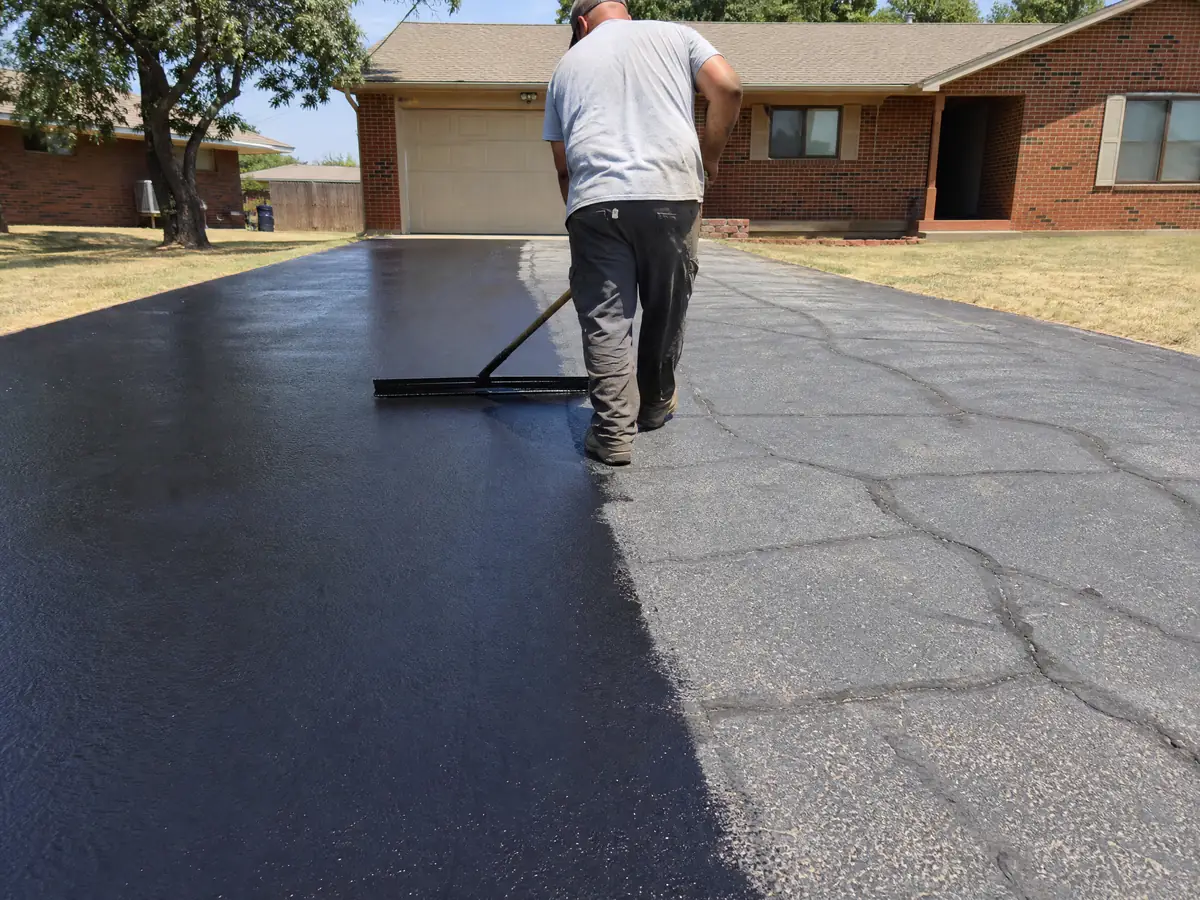
OKC Driveway Repair Co. provides asphalt driveway sealcoating across Oklahoma City, from in-town drives to long acreage runs. Driveway sealcoating means cleaning the asphalt, filling the cracks, and applying two coats of protective sealer. It costs about $0.30 to $0.50 per square foot in the OKC area, so a 24 × 30 ft drive runs roughly $200 to $340 plus a trip charge of about $75 to $100 (HomeBlue Oklahoma City data).
What sealcoat does and doesn’t do
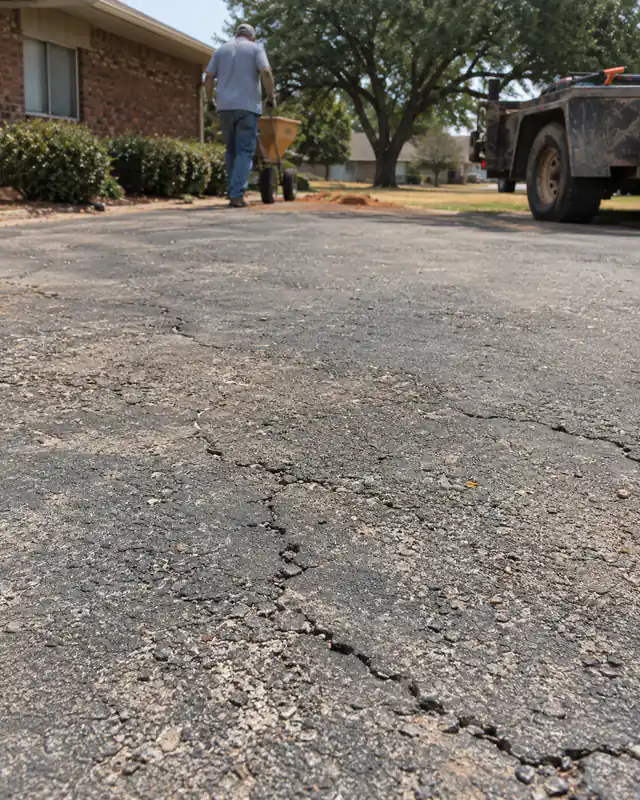
Asphalt is stone held together by a petroleum binder. Oklahoma’s sun and heat oxidize that binder. The city’s record is 113°F, and it has seen as many as 63 days over 100°F in one year. Oxidized binder turns the drive from black to gray, gets brittle, and lets the surface stone come loose. Sealcoat is a thin coat that shields the binder from sun, water, oil and gas, which slows that aging.
It doesn’t fix damage. Sealer does not repair alligator cracking, potholes, soft spots or crumbling edges. Those need asphalt driveway repair first. Sealing over failed asphalt makes it look new for one season and hides the problem until it is bigger.
How we sealcoat a driveway
- Edge and clean. Grass trimmed back from the edges, the surface swept and blown clean.
- Treat oil spots. Oil softens asphalt and stops sealer from bonding, so stains get a primer.
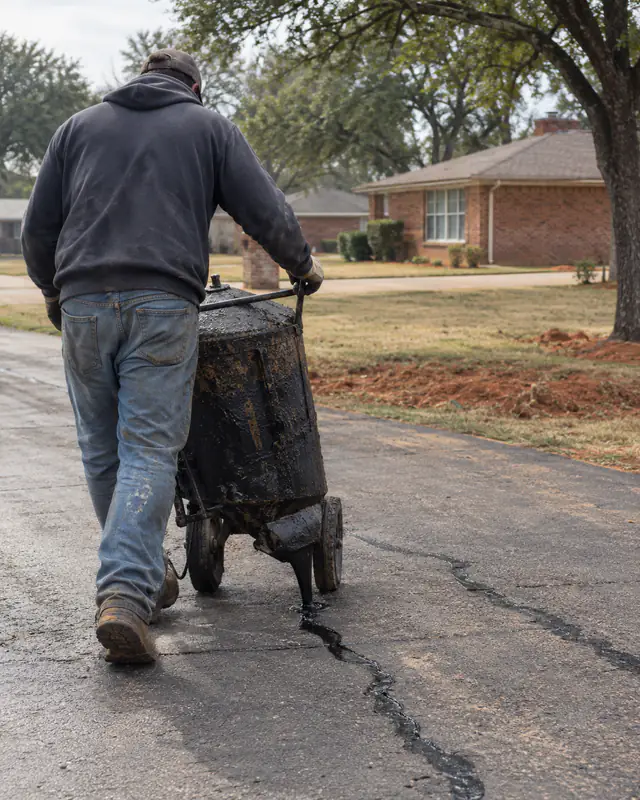
- Fill cracks. Cracks are cleaned and filled with hot-pour rubberized filler, which stays flexible through heat and cold.
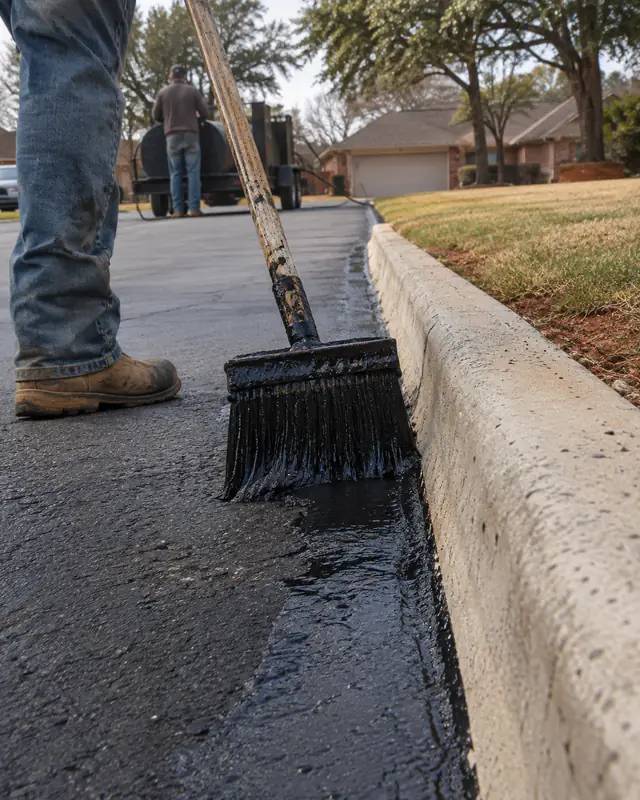
- Two coats. We apply two coats of coal-tar-free sealer, hand-brushing the edges along concrete walks, curbs and the garage so nothing lands where it shouldn’t.
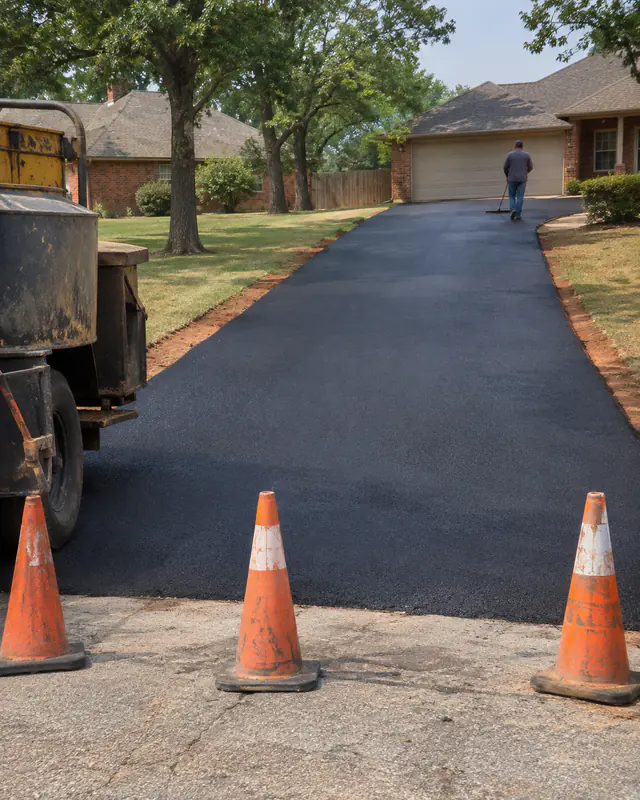
- Close and cure. Cones across the entrance. You can walk on it the next day and drive on it after 24 to 48 hours, depending on the heat.
We use coal-tar-free products. Coal-tar sealers contain high levels of polycyclic aromatic hydrocarbons and have been restricted in several states and cities.
When to seal in Oklahoma
- Every two to three years for most drives. Sealing every year builds thick layers that crack and peel.
- Warm, dry days. Sealer needs temperatures above about 50°F and no rain for a day to cure, so the season runs roughly April through October in the metro.
- New asphalt waits. Fresh asphalt needs time for its oils to cure before the first coat; we’ll tell you when yours is ready.
Long acreage drives in Piedmont and Choctaw and small commercial lots follow the same rules; for lots, see parking lot repair. Our asphalt driveway repair cost guide compares sealing, patching and replacement prices.
What's included
- Drive edged, swept and blown clean
- Oil spots primed so sealer bonds
- Cracks filled with hot-pour rubberized filler
- Two coats of coal-tar-free sealer
- Edges hand-brushed along concrete and curbs
- Sealer kept off garage floors and walks
- Drive closed with cones while it cures
- Next-coat timing noted on the invoice
Signs your drive is ready for sealcoat
- Asphalt faded from black to gray
- Fine surface cracks and loose stone
- Water soaking in instead of beading
- Oil stains softening the surface
- Three or more years since it was last sealed
Not sure which side of the line yours is on? The free driveway damage assessment takes about two minutes.
DIY vs the cheapest bid vs sealcoating done properly
The sealer is the cheap part. Cleaning and crack filling decide whether it lasts.
| What matters | DIY patch | Cheapest bid | Done properly |
|---|---|---|---|
| Cleaning | Swept | Blown off | Edged, swept, blown, oil spots primed |
| Cracks | Sealed over | Sealed over | Hot-pour rubberized filler first |
| Coats | One thin coat | One sprayed coat | Two coats, edges hand-brushed |
| Product | Bucket sealer | Unknown, sometimes coal tar | Coal-tar-free sealer |
| Weather | Whenever | Whenever booked | Dry days above about 50°F |