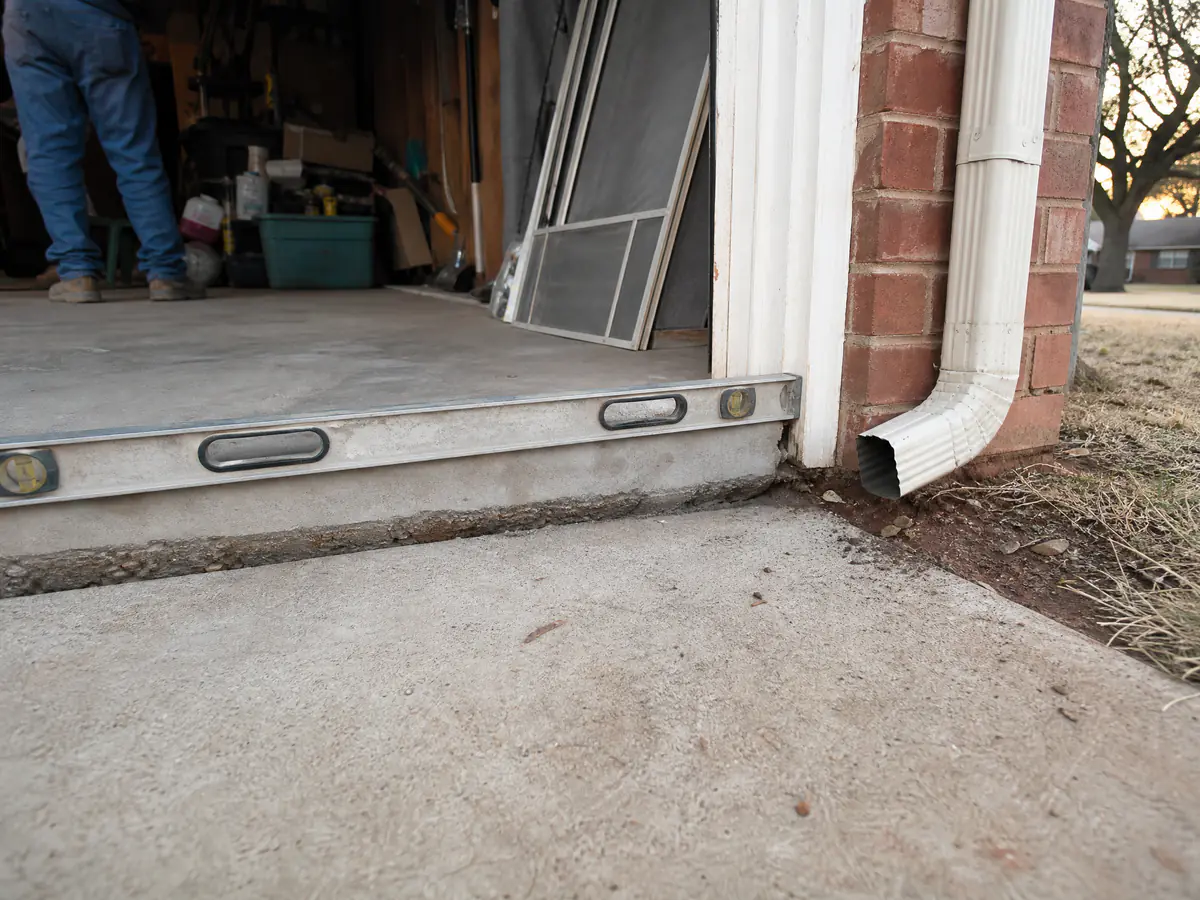
OKC Driveway Repair Co. repairs driveways sinking at the garage across Oklahoma City. A driveway sinking at the garage is a different problem from a sunken panel in the middle of the drive. It sits on different soil, it is often pinned against the garage floor, and it usually has a downspout dumping water right beside it. The repair typically runs $600 to $2,500, depending on whether the panel can be lifted or has to be replaced.
Why the garage joint sinks
When a house is built, the crew digs out around the foundation to pour the footing and then backfills the trench. That backfill is often placed loosely and never compacted the way the rest of the lot was. The garage floor rests on the foundation, so it stays put. The first driveway panel rests on that strip of backfill, so it keeps settling for years.
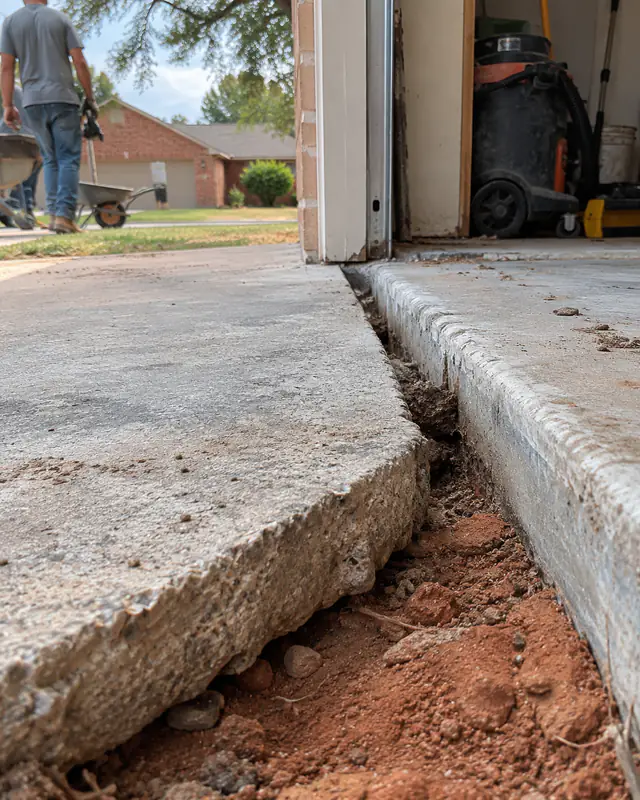
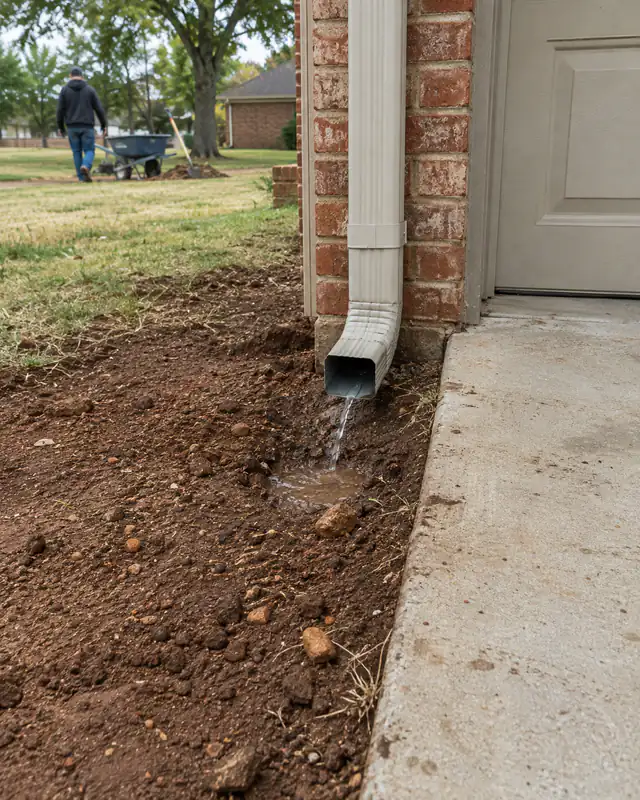
Water speeds it up. A gutter downspout at the garage corner can put hundreds of gallons into that strip in a single storm, and on Oklahoma City’s clay soils, which shrink in drought and swell when wet, the cycle of soaking and drying leaves voids under the slab. The result is the familiar step down from the garage floor, a gap you can see soil through, and rain running back toward the garage door.
Lift or replace
Lift it when the panel is in one piece and free to move. We drill small ports and inject polyurethane foam, which weighs only a few pounds per cubic foot and adds almost no load to the soft fill. The lift is watched with a level against the garage floor, and the panel can carry a car within about an hour. Our driveway leveling page covers the method.
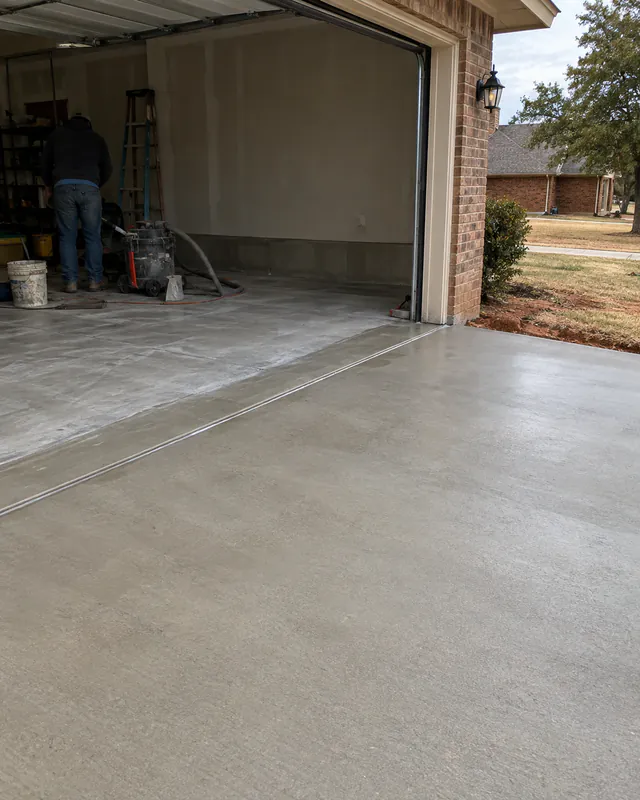
Replace it when the panel has cracked into pieces, or when it has rotated so its edge is caught under the lip of the garage slab. Lifting a pinned panel can snap it. We saw-cut the panel out, dig out the loose backfill and replace it with compacted crushed stone, drill dowels into the neighboring panel, and pour a new panel level with the garage floor. That costs more but removes the soft soil instead of lifting over it.
The quote shows both options when both are possible.
Stop the water
Whichever way we fix the slab, the water is part of the job:
- The garage joint is rebuilt with backer rod and polyurethane sealant so rain can’t run down beside the foundation. See expansion joint repair.
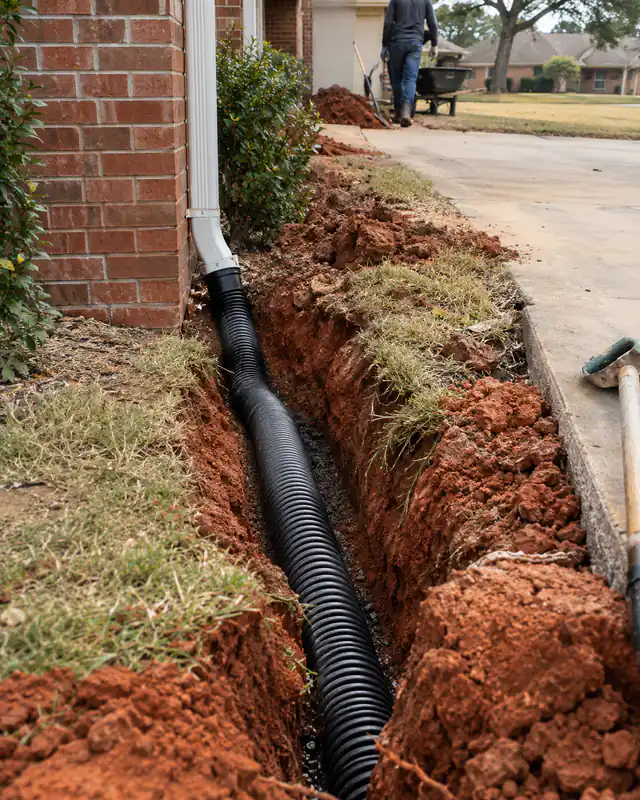
- The downspout is extended or piped underground to discharge well away from the slab.
- The slope is checked so the drive drains toward the street again.
If the soil under the slab has been carried away rather than compressed, with a hollow you can reach into, the problem is closer to a washout, and we treat it that way. For background on the causes, read why driveways sink.
What's included
- Drop measured and void probed at the garage joint
- Downspout and grading checked on both sides
- Panel lifted with foam where it is intact and free to move
- Panel replaced with dowels where it is broken or pinned
- Backfill dug out and replaced with compacted stone on re-pours
- Expansion joint at the garage rebuilt and sealed
- Downspout extended or piped away from the slab
- Written quote showing both lift and replace options
Signs of a sinking garage joint
- A step down from the garage floor to the drive
- A gap at the garage joint wide enough to see soil
- Water running into the garage in heavy rain
- A downspout emptying right beside the joint
- Cracks across the first panel out from the garage
Not sure which side of the line yours is on? The free driveway damage assessment takes about two minutes.
DIY patch vs the cheapest bid vs a driveway done properly
Most failed OKC drives didn't fail because of the concrete. They failed because of what's under it and what was skipped. Here's what to look for on any quote.
| What matters | DIY patch | Cheapest bid | Done properly |
|---|---|---|---|
| Base | Patches over whatever is there | Native clay graded flat, little or no stone | Soft clay dug out; 4–6 in. compacted crushed stone |
| Concrete | Bagged mix, hand-mixed, no air | Spec not on the quote | 4,000–4,500 psi air-entrained ready-mix, in writing |
| Thickness | Whatever the bags cover | 4 in., often thinner at edges | 5 in. with thickened edges |
| Reinforcement | None | Mesh lying on the dirt | #3 rebar on chairs; dowels into old concrete |
| Joints | None | Tooled late or skipped | Saw-cut within 24 h to ¼ depth, ~10 ft apart; ½ in. expansion joints |
| Curing | Left to dry | Left to dry | Membrane curing compound; no cars for 7 days |
| Permit at the street | Skipped | Often skipped | Pulled per OKC Code §50-116 |
| Quote | — | One number, verbal | Written, itemized, per square foot |