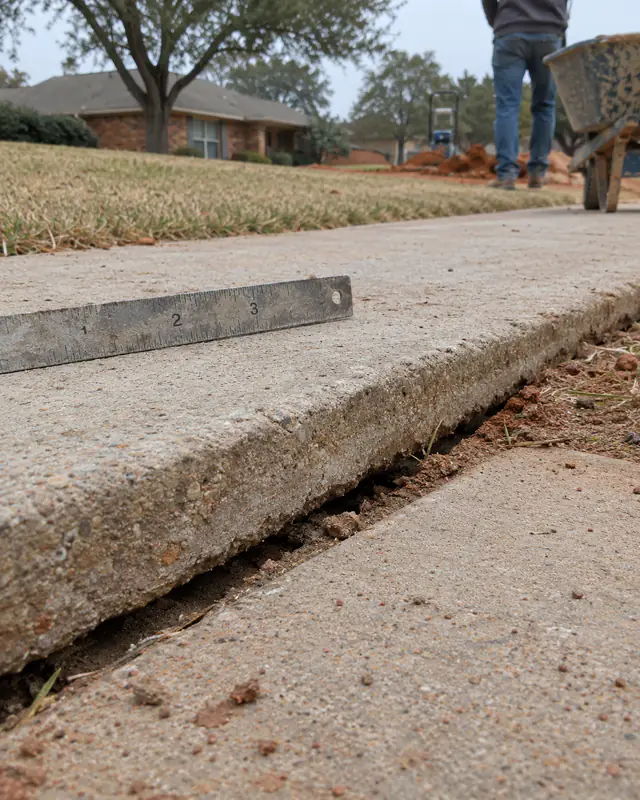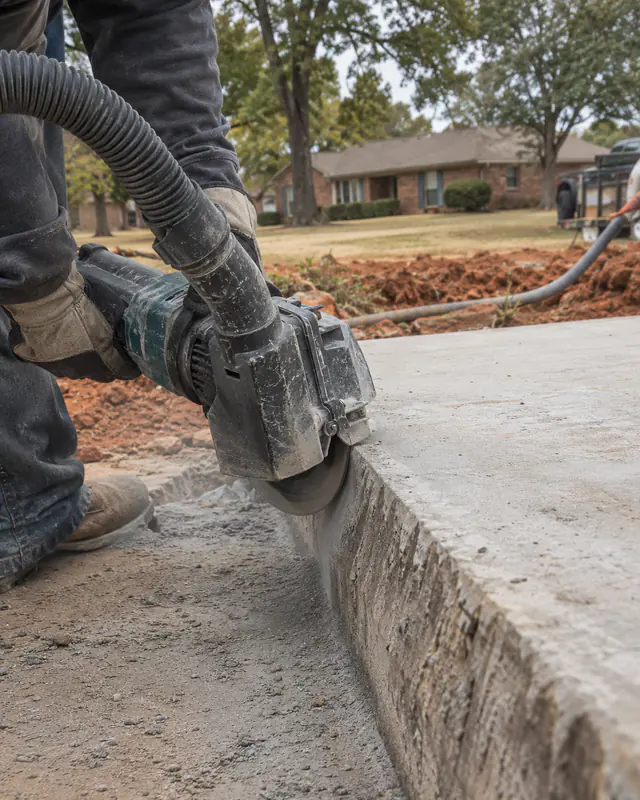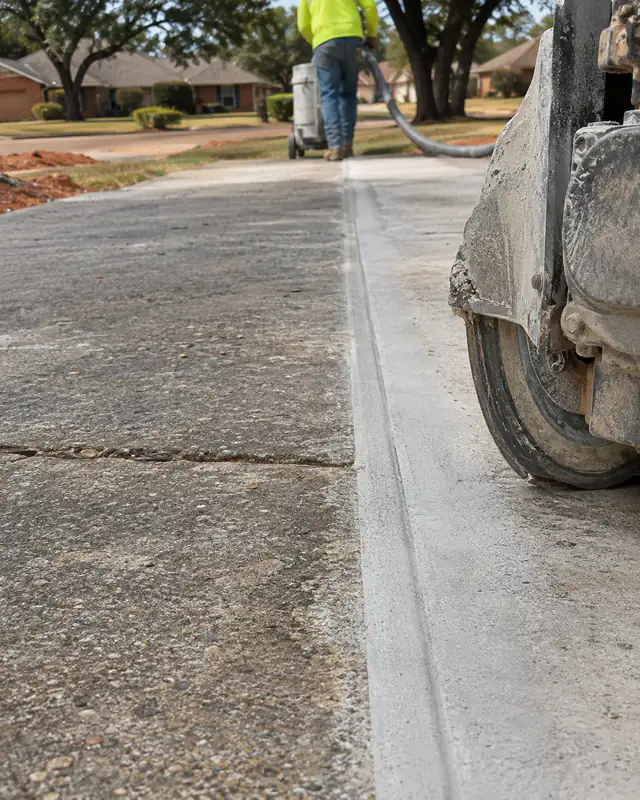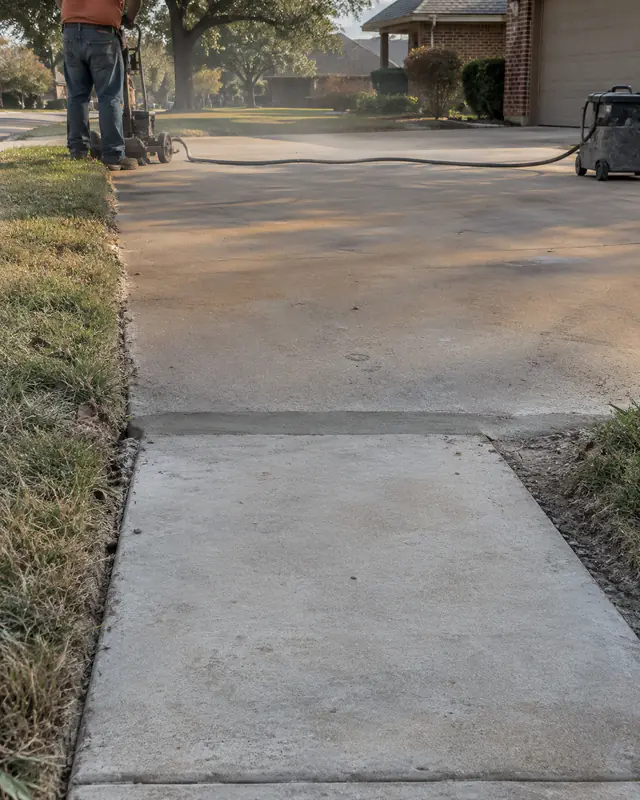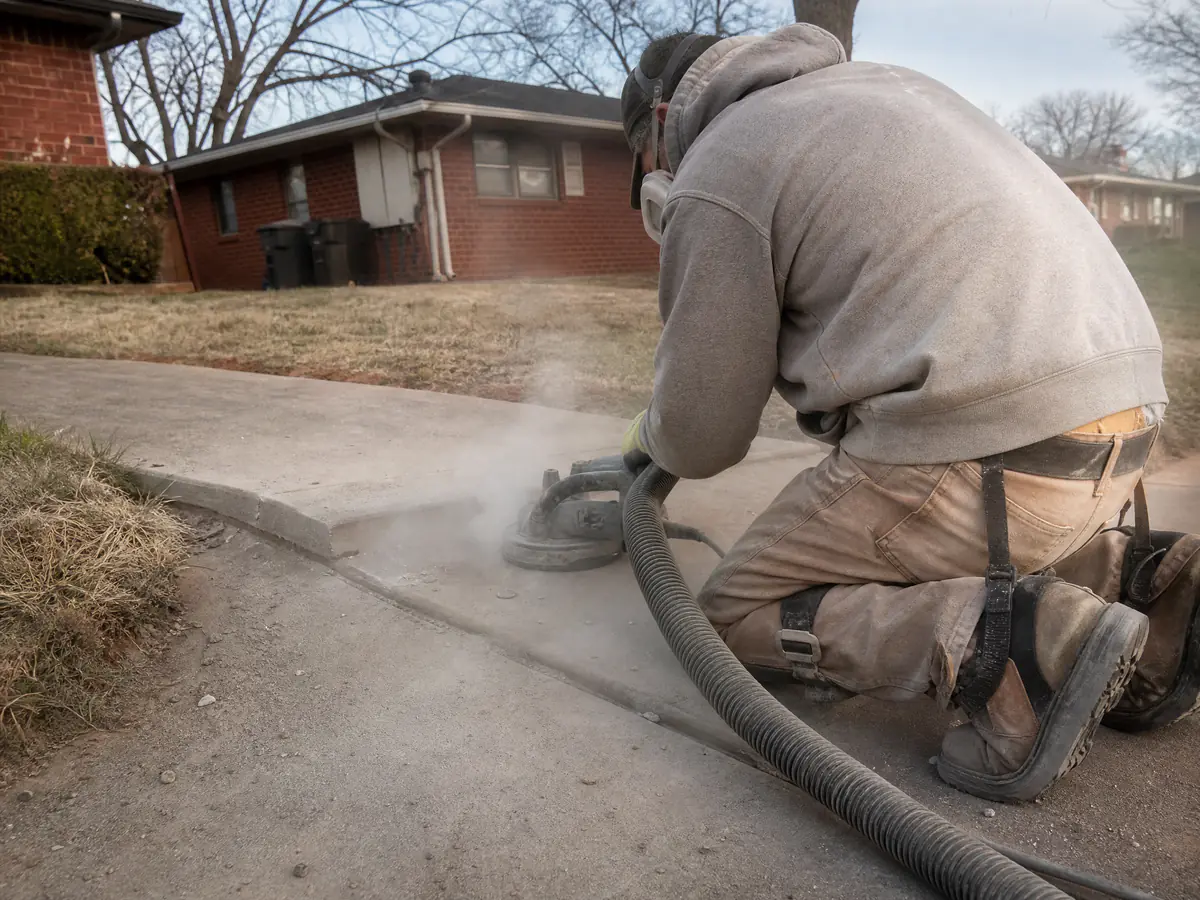
OKC Driveway Repair Co. provides concrete trip hazard grinding in Oklahoma City for homes, HOAs, churches, apartments and small businesses. Concrete trip hazard grinding removes a raised lip at a joint by grinding the high edge down to a smooth, gradual bevel. No panel comes out, nothing needs to cure, and the walkway is usable right away. It works when the panel is sound and only the edge is the problem. Pricing is per site, based on the number of edges, and is usually a fraction of lifting or replacing the panel.
What counts as a trip hazard
The clearest yardstick comes from the 2010 ADA Standards for Accessible Design. On an accessible route, a vertical change in level of up to ¼ inch is allowed (§303.2). Changes between ¼ and ½ inch must be beveled at a slope no steeper than 1:2 (§303.3). Anything taller has to be removed or ramped. Those rules apply to businesses and public accommodations, but many insurers, property managers and HOAs use the same numbers for any walkway or drive.
In Oklahoma City most lips come from two things: tree roots lifting one panel, and clay soil settling under the neighbor so one side drops. Shrink-swell clay like the Kirkland series moves slabs a little every year, so a joint that was flush can grow a lip over a few seasons.
How we grind a lifted edge
- Measure and mark every lip with its height, so you know exactly what was fixed.
- Grind with dust control. We use a grinder with a dust shroud connected to a HEPA vacuum. Concrete dust contains crystalline silica, and dry grinding without capture spreads it everywhere.
- Feather the bevel back across the high panel until the slope meets the ADA limit, rather than cutting a short, steep ramp.
- Finish the surface so it keeps some texture for traction, especially on slopes and where it gets wet.
- Seal the joint so water stops getting under the slab and making the movement worse.
The ground area shows the stone inside the concrete and looks lighter than the weathered slab around it. It dulls with time.
When grinding is the wrong fix
- The low side sank. If one panel dropped rather than the other rising, lifting it back with driveway leveling restores the grade instead of grinding the good panel down to meet it.
- The lip is more than about an inch. Grinding that much removes too much of the slab’s top layer.
- The panel is cracked or rocking. It needs replacement.
- A root is still pushing. The lip will come back. Removing the panel and setting a root barrier is the lasting fix; see tree root driveway repair.
For commercial properties with several hazards, we combine grinding, lifting and panel work into one ranked list as part of parking lot repair.
What's included
- Every lip measured and marked
- Grinder with dust shroud and HEPA vacuum
- Edge ground to a smooth, even bevel
- Bevel run out to meet ADA slope limits
- Ground surface left clean and textured
- Joint resealed afterward
- Photos before and after for your records
- Sunken or cracked panels flagged for leveling instead
Signs grinding is the right fix
- A lip of ¼ inch to about 1 inch at a joint
- The lifted panel is level and not cracked
- The lift has been stable for a while
- A walkway, drive or entrance people trip on
- An insurer or HOA asked for the hazard to be removed
Not sure which side of the line yours is on? The free driveway damage assessment takes about two minutes.
DIY vs the cheapest bid vs grinding done properly
A good grind removes the trip without leaving a new hazard.
| What matters | DIY patch | Cheapest bid | Done properly |
|---|---|---|---|
| Tool | Angle grinder, no dust control | Grinder, dry dust | Shrouded grinder with HEPA vacuum |
| Profile | Gouged, uneven | Short steep ramp | Smooth bevel no steeper than 1:2 |
| Panel check | — | Grinds anything | Sunken or cracked panels sent to leveling |
| Joint | Left open | Left open | Resealed after grinding |