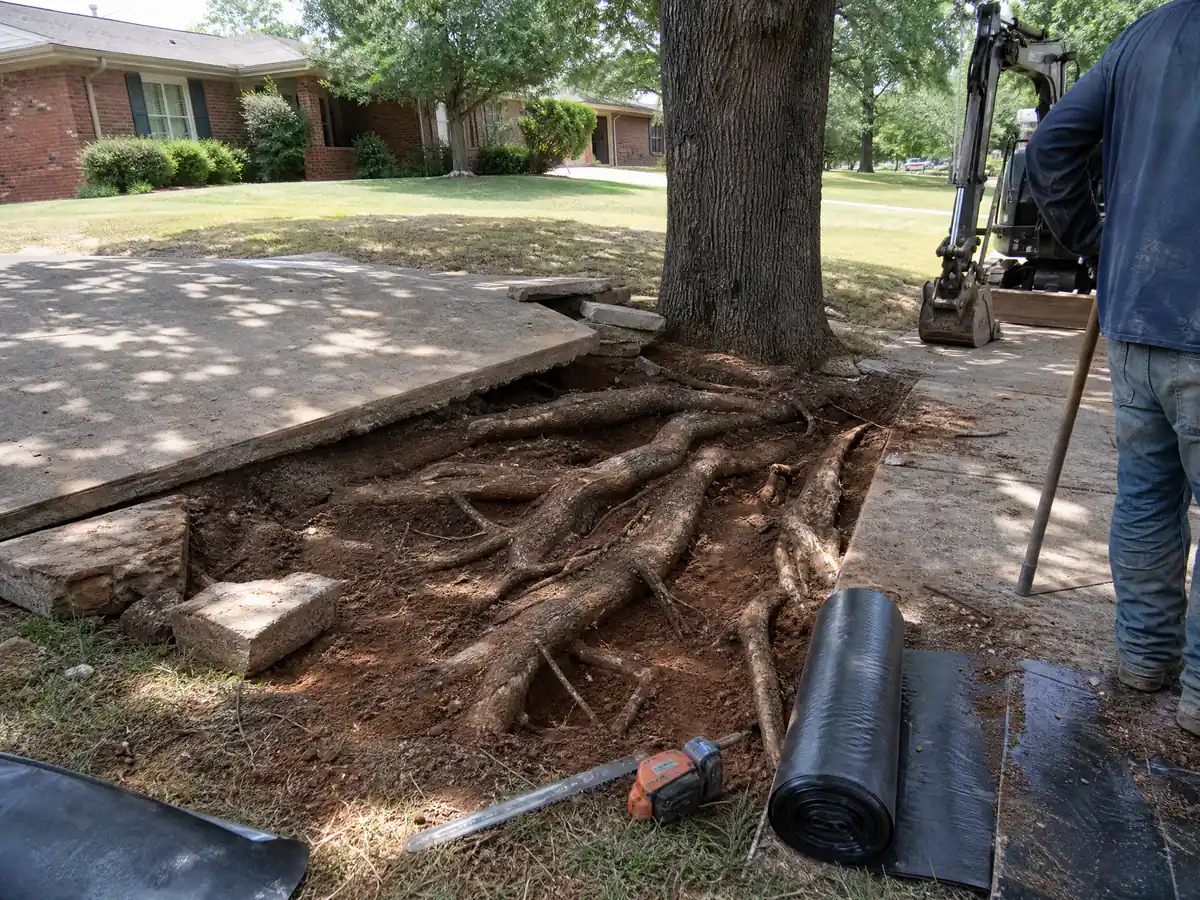
OKC Driveway Repair Co. fixes driveways lifted by tree roots in Oklahoma City, Edmond, Nichols Hills and the older neighborhoods across the metro. When tree roots lift a driveway, the fix is to remove the lifted panels, deal with the roots in a way the tree can survive, set a barrier, and re-pour to grade. Grinding the lip down only treats the symptom. Most root repairs run $1,200 to $4,000, depending on how many panels are involved.
How roots lift a driveway
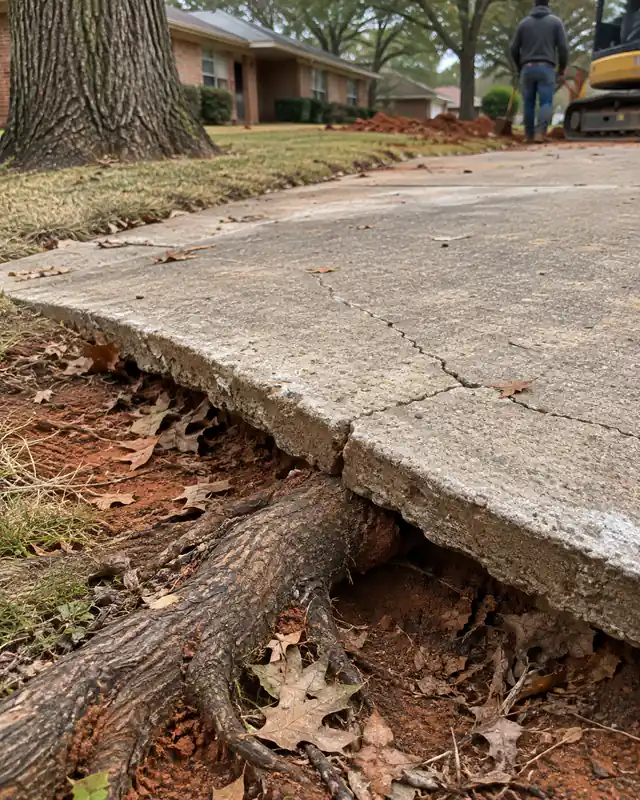
Tree roots grow where water and air are, and the soil just under a concrete slab is often both: rain runs off the edge and condensation collects under it. Roots that grow there thicken every year. Because concrete can’t bend, a root that adds a fraction of an inch each season eventually tilts a panel, snaps it across, or raises one edge into a trip lip at the joint.
In the metro the usual culprits are the big oaks and elms in established neighborhoods. Edmond sits in the Cross Timbers, where post oak and blackjack oak are native. Nichols Hills, Heritage Hills, Mesta Park and the 1950s neighborhoods of The Village and Del City all have mature canopy within a few feet of narrow drives.
How we fix it without killing the tree
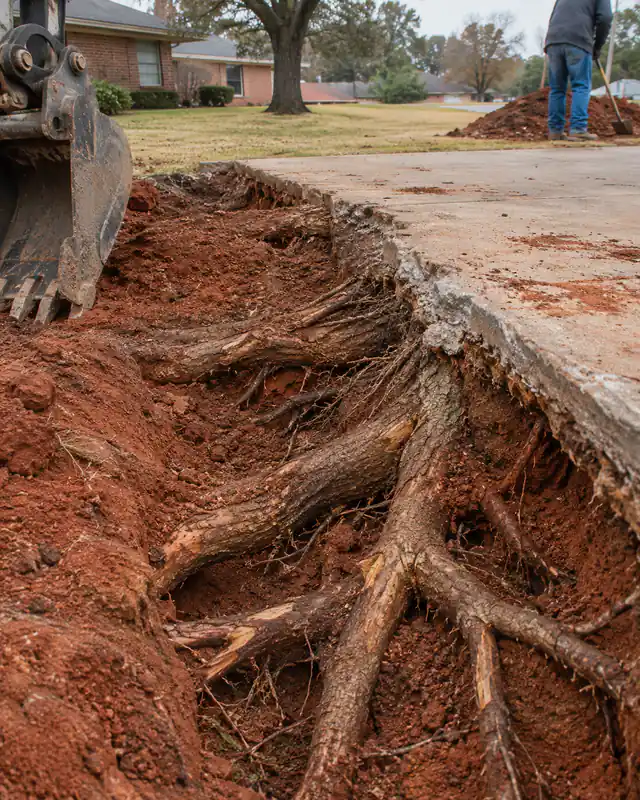
- Remove the lifted panels. We saw-cut at the joints and lift the panels out so the roots can be seen instead of guessed at.
- Get the tree’s side of it. Large structural roots close to the trunk hold the tree up. Before any of those are cut, an arborist should decide what the tree can spare. Small feeder roots can usually be pruned. We make clean saw cuts on approved roots rather than tearing them with machinery.
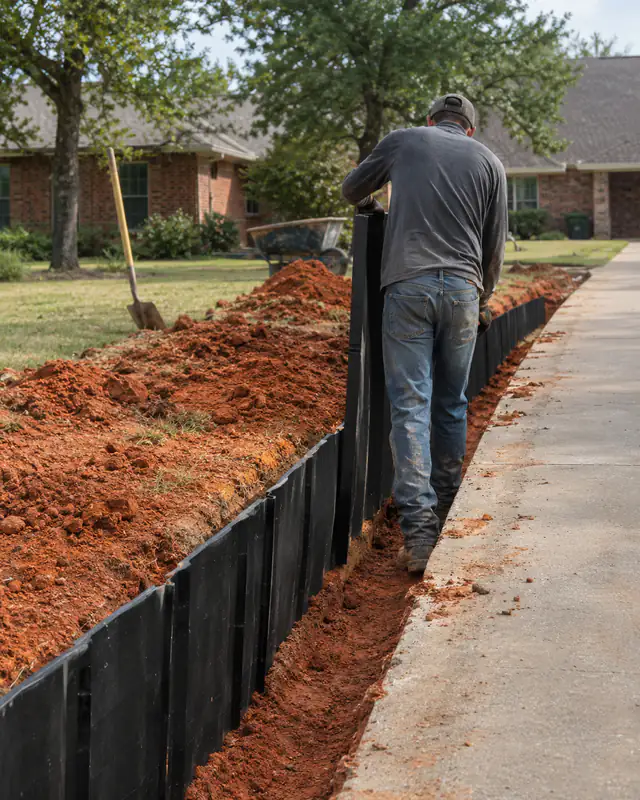
- Set a root barrier. A rigid plastic barrier goes vertically into a narrow trench along the drive edge. It turns future roots downward, under the slab instead of into it.
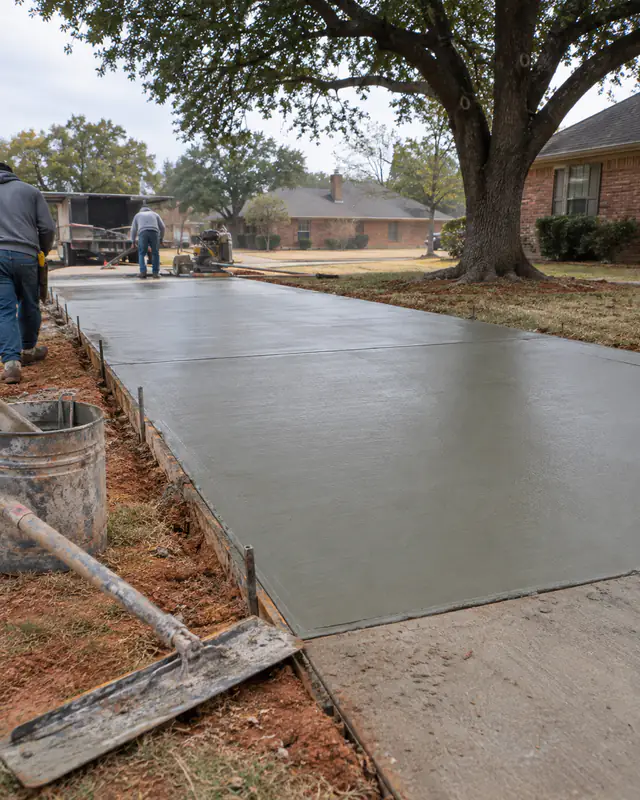
- Rebuild and re-pour. The base is rebuilt with compacted stone, dowels are drilled into the neighboring panels, and new air-entrained concrete is poured level with the rest of the drive.
If the tree is on your neighbor’s side of the line, talk to them before any root is cut. Cutting can kill a tree and create a second dispute. Our guide on a neighbor’s tree roots damaging your driveway covers that conversation and the paperwork.
When grinding is enough
If a panel is lifted by less than about an inch, is not cracked, and the tree is old and slow-growing, grinding the edge to a bevel is a quick, low-cost way to remove the trip hazard. It doesn’t stop the root, so the lip will come back. We’ll tell you which situation you’re in. For drives where several panels are heaved, compare the cost against full replacement.
What's included
- Root source traced, including a neighbor's tree
- Lifted panels saw-cut and removed
- Roots exposed for an arborist decision before any cut
- Clean saw cuts on approved roots, not torn by machinery
- Vertical root barrier set along the drive edge
- Base rebuilt and compacted
- Doweled re-pour level with the remaining panels
- Grinding offered for lifts under about 1 inch on sound panels
Signs roots are under your drive
- A panel tilted up on one side near a tree
- A ridge or hump running across the drive
- Cracks radiating from the side closest to a trunk
- Trip edges that keep growing year after year
- Large surface roots visible at the edge of the slab
Not sure which side of the line yours is on? The free driveway damage assessment takes about two minutes.
DIY patch vs the cheapest bid vs a driveway done properly
Most failed OKC drives didn't fail because of the concrete. They failed because of what's under it and what was skipped. Here's what to look for on any quote.
| What matters | DIY patch | Cheapest bid | Done properly |
|---|---|---|---|
| Base | Patches over whatever is there | Native clay graded flat, little or no stone | Soft clay dug out; 4–6 in. compacted crushed stone |
| Concrete | Bagged mix, hand-mixed, no air | Spec not on the quote | 4,000–4,500 psi air-entrained ready-mix, in writing |
| Thickness | Whatever the bags cover | 4 in., often thinner at edges | 5 in. with thickened edges |
| Reinforcement | None | Mesh lying on the dirt | #3 rebar on chairs; dowels into old concrete |
| Joints | None | Tooled late or skipped | Saw-cut within 24 h to ¼ depth, ~10 ft apart; ½ in. expansion joints |
| Curing | Left to dry | Left to dry | Membrane curing compound; no cars for 7 days |
| Permit at the street | Skipped | Often skipped | Pulled per OKC Code §50-116 |
| Quote | — | One number, verbal | Written, itemized, per square foot |